
Updated: Aug 19, 2026
After a crash, it’s common to notice dents, scratches, and broken lights right away. What’s harder to spot is structural damage, including a bent or misaligned frame, which can affect how your vehicle drives and how safety systems perform. In 2026, that makes frame straightening more important than ever, especially as modern vehicles include advanced driver aids, complex crash structures, and high-voltage components in EVs and HPEVs.
Key Takeaways
- Frame straightening restores the vehicle’s metal frame to alignment so doors, panels, suspension geometry, and safety systems can function correctly.
- Accurate repairs rely on professional measurement, computerized frame measurement, and alignment verification, not “eyeballing” or simple measuring tools.
- EVs and HPEVs often require added care during structural repairs to protect high-voltage components and battery-related hardware.
- Good repair shops document the process and back it with a written warranty covering labor, materials, parts, and paint.
- Structural damage can influence insurance outcomes, including repair approvals, diminished value considerations, and potential total loss decisions.
What Frame Straightening Means for 2026 Vehicles
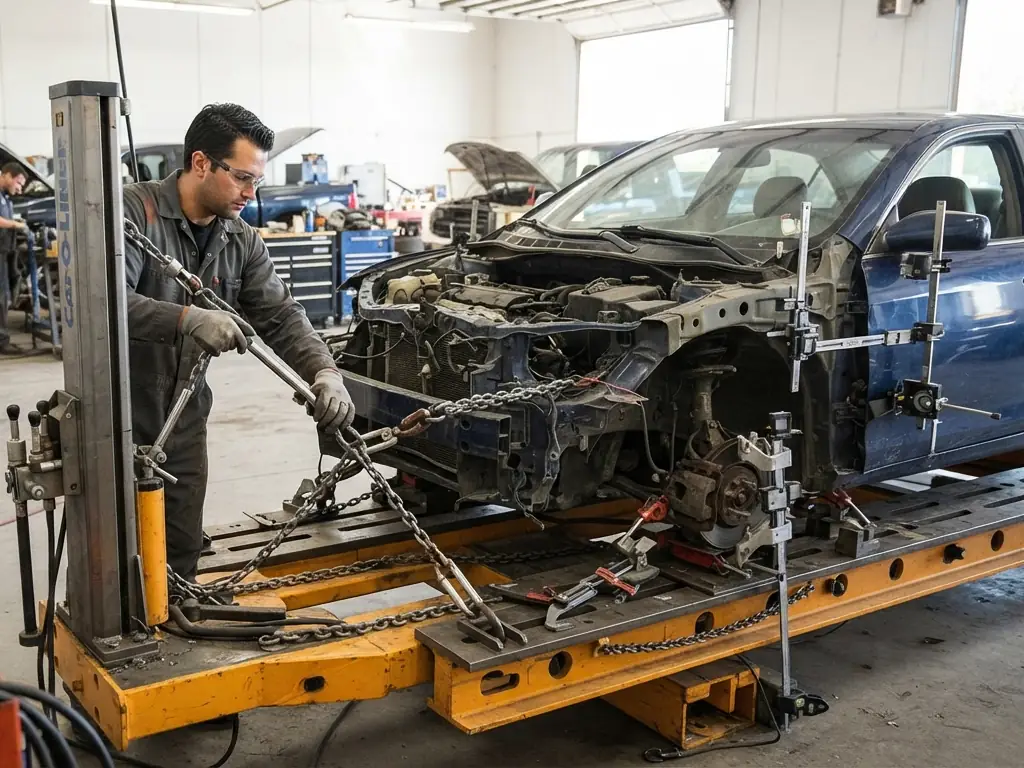
Frame straightening is the process of moving bent structural components back into their original alignment. It’s considered one of the best ways to return a damaged vehicle’s structure to a safe, functional baseline after a collision.
In 2026, vehicles are more complex than older models. Modern body structures integrate crumple zones, reinforcement members, and mounting points for critical systems. That means the “frame” is not just a simple metal rail, it’s part of a larger safety and handling design. Restoring alignment can affect steering tracking, tire wear, and how your vehicle’s suspension and restraint systems line up.
How Frame Restoration Is Done (and Why Specialized Tools Matter)
A correct frame repair is not a “one-size-fits-all” bend-and-go job. Technicians start by measuring the vehicle’s structural alignment using professional-grade systems, then they restore the damaged areas to match factory specifications.
At Downtown Autobody, the focus is on precision and verification. Experienced technicians use computerized measurements to determine where alignment is off before beginning straightening work. For structural assessment, shops commonly use advanced diagnostic methods such as ultrasound-based inspection to help determine the extent of structural displacement. Laser-guided alignment tools then support the final corrections.
This is also why you should ask about the shop’s capability. If the shop cannot explain how they measure the structure and confirm alignment outcomes, that is a red flag. Even minor misalignment can create problems later, such as door misfit, wind noise, uneven panel gaps, or handling changes.
What gets checked during a modern frame repair
While every repair starts with measuring, the process typically includes confirming that the vehicle’s structural reference points match spec and that related systems can be reassembled and calibrated properly. Depending on the impact location and vehicle design, technicians may also address alignment-related components that support handling and safety.
If you want to understand why accidents can cause hidden structural damage, review what car accidents do to your vehicle’s body and frame.
Frame Straightening Differences for EVs and HPEVs
Electric vehicles and high performance electric vehicles (HPEVs) add new layers of risk and complexity. The structure may still require straightening, but technicians must protect high-voltage systems while working around battery and HV components.
1) Battery protection and HV system safety come first
On many EVs and HPEVs, major high-voltage components are packaged in or near structural areas. During a structural repair, proper handling is essential to avoid damage to battery cells, battery casing, HV cables, and related safety hardware.
That changes how repairs are staged. Shops should plan for safe isolation and inspection steps before structural work proceeds, and they should coordinate any needed procedures with the vehicle’s design and the manufacturer’s repair guidance.
2) Structural damage may include HV-related hardware
A bent or misaligned frame can shift more than metal. It can place stress on wiring harness routing, mounting points, and shielding. Even if the vehicle appears to start normally, a misaligned structure can contribute to faults later, including insulation damage or sensor misreadings.
3) Calibration and sensor alignment are part of “getting it right”
In 2026, many EVs and HPEVs include advanced driver assist features that depend on stable alignment and accurate sensor positioning. Structural restoration can require follow-up verification so the vehicle systems operate as intended after the repair.
4) Hybrid and EV-specific repair planning
Hybrid vehicles (with both electric and combustion systems) and EVs may share similar concerns around electrical harnessing and component placement. The main difference is that EV and HPEV systems concentrate high-voltage components in a way that demands extra caution during structural straightening and reassembly.
If your vehicle includes high-voltage components and you’re unsure what to ask for, you can start by discussing your vehicle’s drivetrain and damage location with the shop. For broader guidance on the collision repair journey, you may also find it useful to read how mechanics and insurance handle body work after a claim.

Choosing the Right Frame Straightening Shop
Not every shop treats frame work with the same level of care. Some focus on speed and throughput, which can lead to rushed measurement, incomplete inspection, or shortcuts that show up later as alignment problems and repeat issues.
To find a shop that repairs with precision, use a simple checklist:
- Ask for a written warranty. A strong warranty should cover labor, materials, parts, and paint.
- Request clarity on the process. You should be able to understand how they measure the damage and verify alignment afterward.
- Speak with people you trust. Friends and family who have had repairs done can share what to expect.
- Ask questions. If you are uncertain about battery handling, inspection methods, or alignment verification, ask before work begins.
- Trust your instincts. If the shop sounds vague about equipment or quality control, keep looking.
When you’re comparing repair experiences, it can also help to understand how local shops operate versus bigger collision centers. Here’s a related read: local shop vs. national collision center in Rohnert Park.
Frame Damage and Insurance Claims: Total Loss, Diminished Value, and What to Expect
Structural repairs can affect your claim in ways that purely cosmetic damage often does not. Insurers may review frame alignment concerns as part of liability and damage evaluation, which can influence repair approval, settlement amount, and sometimes whether a vehicle is declared a total loss.
Important note: Total loss rules can vary by insurer and jurisdiction, and the exact threshold may depend on the vehicle’s age, repair estimates, salvage value, and applicable coverage terms. The information below explains the typical way structural damage is assessed in 2026 claims workflows.
1) How insurers treat structural damage
When a claim involves bent or misaligned structural components, insurers generally look for evidence that repairs can restore factory alignment and safety performance. This usually means reviewing the estimate, the repair plan, and sometimes the repair shop’s documentation and measurement approach.
In many cases, structural damage triggers more scrutiny because it can correlate with safety and handling impacts. If the repair requires extensive straightening or if critical components are compromised, insurers may question the feasibility or cost-effectiveness of repair.
2) Repair vs. total loss: how thresholds are commonly evaluated
Many insurers use a total loss threshold based on the relationship between:
- The estimated repair cost (including parts, labor, diagnostics, paint, and calibration where required)
- The vehicle’s actual cash value (what it was worth before the loss)
- Salvage value (what the remaining vehicle might be worth if it’s totaled)
When structural straightening and related repairs push estimates high, total loss becomes more likely. The more advanced the vehicle (including EV/HPEV HV components and advanced calibration requirements), the more cost items may be included.
3) Diminished value after structural repairs
Even after a successful repair, some vehicles can experience diminished value because buyers may view prior structural damage as a risk. Insurers and claimants may address diminished value differently depending on coverage, state rules, and the insurer’s policy.
What helps when diminished value is discussed is clear evidence of proper structural restoration. Documentation that shows alignment was restored to specifications can support the argument that the vehicle was repaired correctly, not just “put back together.”
4) What to expect during the claims process
Here’s what you can typically expect after filing a claim involving frame damage:
- Inspection and estimating. The vehicle is assessed and an estimate is prepared.
- Structural review. If frame straightening or structural work is required, the insurer may request additional information or supporting documentation from the shop.
- Repair planning. A quality shop will plan repairs around factory procedures, including verification steps that confirm alignment.
- Repair completion and verification. Final checks should support that the vehicle is restored as intended, including any post-repair calibration needs.
To better understand how claims and repair coordination work day-to-day, read this guide on mechanics, car insurance, and body work.
What to Ask Before Work Starts (Especially After a Structural Hit)
If you want to avoid surprises, ask these questions before your vehicle is put on the schedule:
- Will you document the measurements? Ask what alignment targets are used and how verification happens.
- Do you use diagnostics beyond visual inspection? In structural repairs, measurement is critical.
- How do you protect EV/HPEV high-voltage components? If your vehicle is electric or hybrid, this is a must-ask.
- What is covered under your written warranty? Confirm labor, materials, parts, and paint coverage.
- What happens if parts are delayed? Request an honest timeline and communication plan.
If you’re planning your schedule while your vehicle is in the shop, Downtown Autobody also discusses options for staying mobile, including loaner vehicles. See loaner vehicle options and whether Downtown Autobody offers loaners.
Related Repairs That Often Come With Frame Straightening
Frame straightening frequently happens alongside other collision repairs. Once the structure is aligned, technicians can restore panels, replace damaged components, and complete paint and finish work so the vehicle looks correct and protects against corrosion.
For a broader look at the types of repairs you may see after collision damage, check the four most common auto body jobs.
And if you’re trying to estimate how long repairs might take based on the scope of work (including structural tasks), visit How long will auto body repairs take? (2026 guide).
Why Downtown Autobody Customers Choose a Shop That Plans for Precision
Frame straightening is specialized work. The goal is not just to bend metal, it’s to restore the vehicle’s alignment and support correct fit, function, and safety performance after the repair.
Downtown Autobody focuses on professional equipment, careful measurement, and a repair approach designed for modern vehicles, including EV and HPEV considerations. If you’d like to talk through your situation, you can start with our auto body shop and then reach out via contact us.
Conclusion
In 2026, frame straightening is a precision repair that matters for safety, handling, and long-term vehicle value. Whether your vehicle is gas, hybrid, or a newer EV or HPEV, the best results depend on correct measurement, careful alignment verification, and protection of sensitive components during structural work. If your vehicle may have frame damage, don’t assume you can “just replace panels.” Get it evaluated, choose a shop that works with the right tools, and expect a repair process that includes documentation and verification.
FAQ
Can you tell frame damage just by looking at the vehicle?
Often, no. Dents and scratches may look minor even when the underlying structure is bent. Measurement and diagnostic inspection are needed to confirm alignment damage.
How long does frame straightening take?
It depends on the damage extent and the vehicle type. Structural repairs may also require additional verification steps and follow-up calibration needs on advanced vehicles. For timing expectations in 2026, see this complete guide.
Does frame straightening apply to EVs and HPEVs?
Yes, structural alignment still matters. The difference is that EV/HPEV repairs require extra care to protect high-voltage components and related battery hardware during the straightening and reassembly process.
Will insurance automatically total a vehicle with bent frame damage?
Not automatically. Insurers typically compare repair estimates against the vehicle’s actual cash value and salvage value, and they may factor in structural risk. The best way to influence the outcome is a detailed, documented repair plan from a capable shop.