Updated July 22, 2026
Getting into a car accident is unsettling no matter how minor the collision seems. Your hands shake, your mind races, and it’s easy to forget the basic steps that protect you legally and financially. Having a plan in place before you ever need it can make the difference between a smooth claims process and a drawn-out headache.
This checklist walks Sonoma County drivers through exactly what to do after a collision, from the moment of impact to filing your insurance claim. Whether this is your first fender bender or you’ve been through it before, these steps help you stay calm and protect yourself.
Step 1: Get to Safety First
Before anything else, move your vehicle out of traffic if it’s drivable. Pull onto the shoulder, a nearby parking lot, or any spot away from oncoming cars, and switch on your hazard lights right away.
If your car won’t start or move safely, get yourself and any passengers out and away from the road. Standing on the sidewalk or shoulder keeps you clear of a possible second collision, which happens more often than people expect on busy Sonoma County roads.
Step 2: Check for Injuries
Once everyone is somewhere safe, take a moment to check yourself and your passengers for injuries. Adrenaline can mask pain, so don’t assume you’re fine just because nothing hurts immediately.
If anyone is hurt or you’re unsure, call 911 right away. Emergency dispatchers can send medical help quickly, and if bystanders are nearby, don’t hesitate to ask them for assistance while you wait.
Step 3: Call the Police
Even for a minor accident, having police on scene matters. An official report documents what happened from a neutral point of view, which protects you if the other driver later disputes the facts or files a questionable claim.
When you call, let the dispatcher know if anyone needs medical attention. Reporting the accident, even a small one, gives you a paper trail that insurance companies take seriously.
Step 4: Exchange Information (Carefully)
While you’re waiting for police to arrive, exchange information with the other driver. You’ll want to collect:
- Full name and contact details
- Insurance company and policy number
- Driver’s license number
- License plate number
- Vehicle make, model, and color
- The exact location, including cross streets or nearby landmarks
The other driver should be gathering the same details from you. One important note: don’t let anyone photograph your license or registration, and avoid handing out your personal contact information to bystanders or passengers who aren’t directly involved. Sticking to insurance and basic contact exchange protects your privacy.
Step 5: Document Everything at the Scene
Once officers arrive, write down each officer’s name and badge number, and ask where you can request a copy of the accident report later. This report becomes a key piece of documentation for your claim.
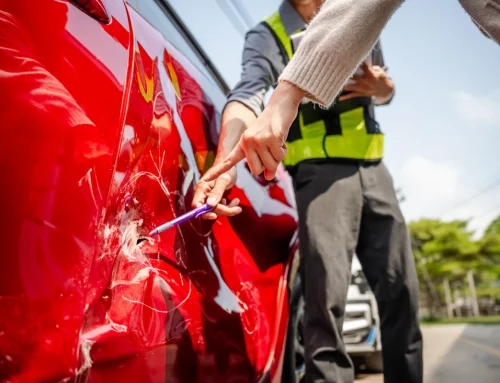
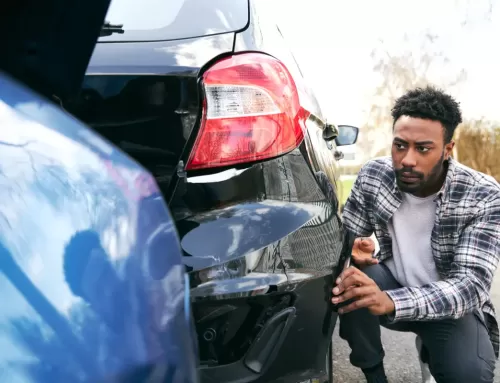
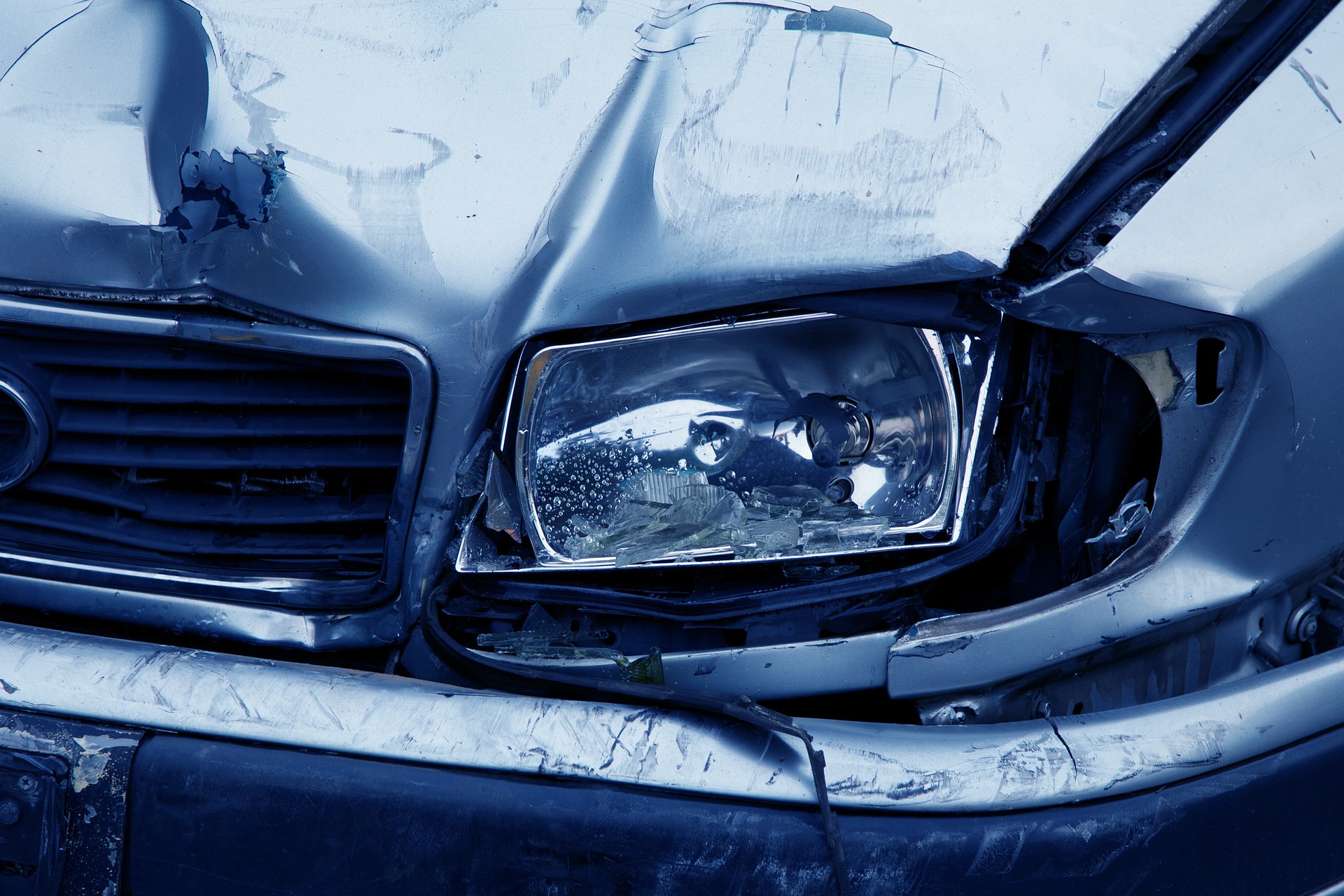
Take photos of the damage on both vehicles from several angles. Wide shots showing the full scene and close-ups of specific damage both help. If there are witnesses, ask for their contact information too. A witness statement can settle disputes that might otherwise come down to one driver’s word against another’s.
Step 6: Contact Your Insurance Company
Call your insurer as soon as you can, ideally from the scene itself if you’re able. Filing a claim promptly matters even when the accident wasn’t your fault, because the other driver may delay their own claim or never file one at all, leaving you to handle repairs on your own timeline.
Having all your documentation, photos, the officer’s information, and the other driver’s insurance details ready when you call speeds up the process considerably. For background on how claims and coverage typically work after a collision, our autobody repair team can walk you through what to expect once your claim is filed.
What to Do If Your Car Needs a Tow
Not every accident leaves your car in drivable condition. If your vehicle needs to be towed, Downtown Autobody offers free towing throughout Sonoma County. Call 707-665-9100 and we’ll help get your vehicle off the road and into our shop safely.
Our team has handled collision repair in the area since 2004, when Gus Trevena purchased the shop and later relocated to Rohnert Park. Since then, we’ve expanded to include a dedicated location for RV auto body repair, giving Sonoma County drivers a full range of repair options under one trusted name.
Getting Your Car Repaired After the Accident
Once your claim is filed, the next step is getting your vehicle repaired properly. Our shop handles everything from minor bumper damage to structural frame straightening, using MIG/TIG welding and a 3M Plastic Repair System for plastic components that took a hit.
We also operate a full auto paint shop on-site, where we use the Spies Hecker Waterborne Paint System along with computerized color matching to make sure your repaired panels blend seamlessly with the rest of your vehicle. No mismatched paint, no obvious signs that anything happened.
While your car is in the shop, you don’t have to be without transportation. We provide free loaner vehicles to keep you on the road during the repair process.
Know Your Rights During the Claims Process
Many drivers don’t realize they have choices when it comes to where their car gets repaired, even if their insurance company suggests a preferred shop. You have the right to select a repair facility you trust, and understanding this upfront can save frustration later.
Our customer rights page breaks down what you’re entitled to during the repair and insurance process, so you’re not caught off guard by unfamiliar terms or pressure to use a shop you didn’t choose.
Commercial Vehicles and Special Cases
If the accident involved a work truck or commercial vehicle, the process looks a little different, especially around documentation and liability. Our commercial truck repair team understands the added complexity these cases bring and can guide you through it.
Final Thoughts on Handling an Accident the Right Way
Accidents rarely go perfectly, and that’s okay. The most important things you can do are get the other driver’s insurance and contact information, take photos of the damage, and involve the police so responsibility gets assigned fairly. Everything else, including the repair itself, tends to fall into place once those basics are covered.
If you need a tow after an accident anywhere in Sonoma County, remember that Downtown Autobody offers free towing. Call 707-665-9100 and we’ll take it from there.