
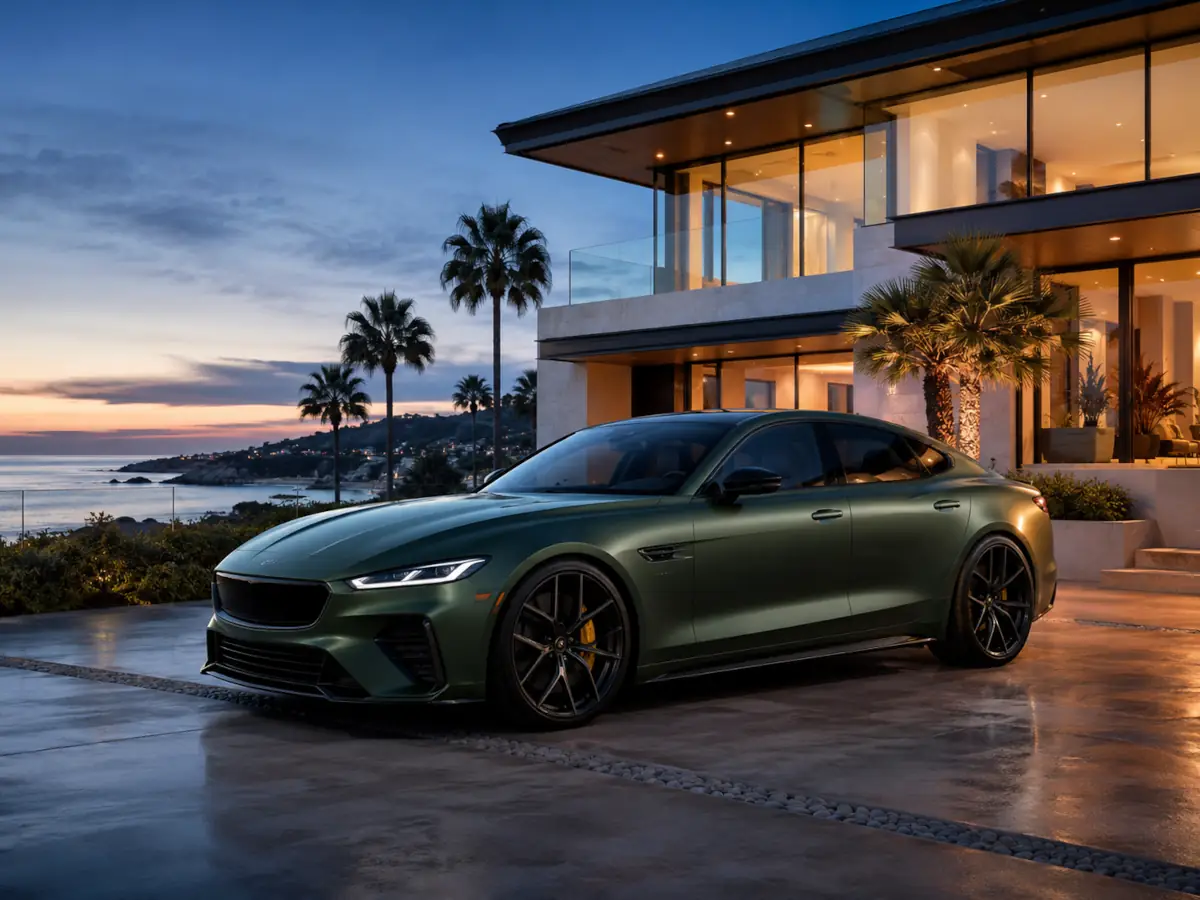
If you’ve ever priced out a matte wrap or a flat black respray and felt your jaw drop, you’re not imagining things. A mid-size sedan respray at a high-end specialist body shop will run you well over $10,000 in 2026, and that’s the tier of shop typically required to get a matte or flat finish right. Matte and flat finishes cost more than gloss for reasons that go well beyond marketing, and once you understand the mechanics behind the price tag, the number starts to make a lot more sense.
Key Takeaways
- Labor drives the price. Labor makes up 60-70% of a car paint job’s total cost, and matte work demands slower, more exacting hands.
- Mistakes can’t be buffed out. Unlike gloss, a flawed matte panel usually has to be stripped and redone from scratch, which raises both risk and price.
- Material costs are climbing. Premium refinish coatings from brands like Glasurit and Standox saw price increases of up to 20% in 2026.
- Regional location matters. West Coast shops run 1.20x to 1.35x the national average for high-end paint work due to regulations and specialty demand.
- Show-quality matte starts high. Entry-level “concours” quality paint work, the standard often needed for a flawless matte finish, starts around $13,500.
- It’s a full paint process. Matte sits on top of the same layered auto paint system as gloss, primer, base coat, and clear coat, just with a specialized final layer.
- An estimate settles the real number. Because scope varies so widely, the only way to know your true matte and flat finishes cost is a hands-on estimate from a shop that works with these finishes regularly.
What Makes Matte and Flat Finishes Different From Gloss
A standard glossy finish reflects light evenly, which is exactly what gives it that mirror-like shine. Matte and flat finishes are engineered to do the opposite.
The clear coat used in a matte system contains flattening agents that scatter light instead of bouncing it back cleanly. That’s a fundamentally different chemical formulation than a standard clear coat, not just a different look applied at the end.
When you understand that matte isn’t simply “gloss with less shine,” the higher matte and flat finishes cost starts making more sense. It’s a specialized product requiring a specialized process from the base coat all the way through the final layer.
Why Matte and Flat Finishes Cost More at the Labor Level
Labor is where most of your money goes on any paint job, and it’s where matte finishes really separate from gloss. Labor accounts for 60-70% of a car paint job’s total cost, and matte work pushes that percentage even higher because of how unforgiving the material is.
Here’s the mechanism: a glossy clear coat can be color-sanded and buffed to fix dust nibs, orange peel, or minor runs after it cures. A matte clear coat can’t be buffed the same way without destroying the flat texture and creating uneven sheen across the panel.
That means our technicians have to get it right the first time, every time, across every panel. When a mistake does happen on a matte job, the fix often isn’t a quick polish, it’s a full re-strip and repaint of that section.


The Material Cost Behind Matte and Flat Finishes
Beyond labor, the products themselves add to matte and flat finishes cost in a way gloss simply doesn’t. Premium refinish coating lines like Glasurit and Standox saw price increases of up to 20% in 2026, and those are the exact product lines most capable of producing a true, factory-level matte finish.
Axalta’s refinish products, including Spies Hecker, went up 6.8% to 7.6% in the same year. When you’re using a waterborne, low-VOC system like the one we run in our own shop, those material costs are baked into every job before a single panel gets sprayed.
It’s not just the clear coat that costs more either. Matte and flat systems often require additional prep steps, specialized flattening additives, and tighter climate control in the booth to keep the finish consistent panel to panel.

Where Matte Fits Into the Layers of Auto Paint
Every paint job, matte or gloss, follows the same basic structure: primer, base coat, and clear coat. Matte finishes dull the shine more dramatically than pearlescent or metallic options and don’t refract or reflect light the way other finishes do.
The difference lives almost entirely in that final clear coat layer. Because that layer behaves differently under the gun and during cure, technicians need specific training on how matte systems flow, level, and dry compared to a standard glossy topcoat.
When we walk a customer through how the different layers of auto paint work, this is usually the point where matte and flat finishes cost starts to click for people. It’s not one extra step, it’s a different formulation running through the entire final stage of the process.

Matte and Flat Finishes Cost More Because Mistakes Can’t Be Buffed Out
This point is worth repeating because it’s the single biggest driver of matte and flat finishes cost. On a glossy panel, a technician has room to correct dust contamination or minor texture issues after the clear coat cures.
On a matte panel, that same correction attempt usually creates a visible shiny spot where the buffing pad touched the surface. The flattening agents that give matte its texture get disturbed by any mechanical polishing, so there’s no safety net once the coat is down.
That’s why shops that specialize in matte and flat work invest heavily in booth conditions, spray technique, and dry-time control before the first coat ever goes on. The goal remains the same across every job, whether it’s gloss or matte: a finish that looks correct and holds up over time.
Regional and Facility Factors That Affect Matte and Flat Finishes Cost
Where you get your car painted matters more than most people expect. West Coast shops run 1.20x to 1.35x the national average for high-end paint work, driven by stricter environmental regulations and a higher concentration of specialty facilities capable of doing this kind of work correctly.
If you’re chasing true show-quality results, entry-level concours paint work can easily around $35,00- to $50,000 in 2026. Matte finishes often land in that territory because there’s so little room for error and because the facility requirements are steeper than a standard respray.
A shop needs adequate booth space, tight climate control, and technicians trained specifically on matte and flat systems to hit that bar consistently.
Specialized clear coats, meticulous prep, and harder color-matching push matte and flat finishes well beyond the price of a conventional glossy repaint.
Matte and Flat Finishes Cost More for RVs and Commercial Fleets Too
It’s not just passenger cars that see this pricing gap. RVs with matte or flat gel coat sections face the same buffing limitations, plus the added complexity of fiberglass surfaces that behave differently than sheet metal under a spray gun.
Our 25,000 square foot facility handles RV repair and gel coat restoration for exactly this reason, because matte and flat sections on a coach need the same careful, no-margin-for-error approach as a car panel. Commercial fleets running matte wraps or flat-finish branding face similar cost pressure, especially when multiple vehicles need to match precisely.
Our commercial truck paint services rely on computerized color matching to keep every unit in a fleet consistent, which matters even more when the finish has no shine to hide small variations.


How We Approach Matte and Flat Finishes Cost at Downtown Autobody
When you bring a matte or flat finish job to us, we don’t treat it like a standard respray with a different clear coat swapped in. We treat it as its own process, with its own booth conditions, its own dry times, and its own technician assignments based on who has the most experience with these systems.
We use a waterborne, low-VOC paint system with computerized, seventeen-digit VIN-based color matching to make sure the formula is right before we ever pick up a spray gun. That matters even more on matte work, where there’s no polishing step at the end to mask a slightly-off match.
Getting an Accurate Estimate for Matte and Flat Finishes Cost
The honest answer to “how much will my matte or flat finish cost” is that it depends on your vehicle, your current paint condition, and how much correction work is needed before the color even goes on. A single panel touch-up costs far less than a full-vehicle matte respray, and hidden rust or old bodywork can add steps you didn’t plan for.
That’s why we always recommend getting hands-on with the vehicle before locking in a number. When you reach out to our team, we walk through the scope with you and give you a realistic figure based on what we actually see, not a generic online calculator.
Final thoughts on pricing: matte and flat finishes cost more because every part of the process, labor, materials, and facility requirements, gets more demanding. Knowing that up front helps you budget correctly instead of being surprised halfway through the job.
Conclusion
Matte and flat finishes cost more than gloss for reasons rooted in chemistry, labor, and risk, not just brand markup. From the flattening agents in the clear coat to the fact that mistakes can’t be buffed out, every stage of the process costs more time and more precision than a standard respray.
If you’re weighing a matte or flat finish for your car, RV, or fleet vehicle, understanding matte and flat finishes cost ahead of time helps you plan realistically. We’re happy to walk you through your specific project and give you a straightforward, honest number based on what your vehicle actually needs.
Frequently Asked Questions
Why do matte and flat finishes cost more than glossy paint jobs?
Matte and flat finishes cost more mainly because the clear coat can’t be sanded or buffed to fix mistakes the way gloss can. That shifts more risk onto labor, and since labor already makes up 60-70% of a paint job’s total cost, matte work pushes that share even higher.
Is a matte or flat car paint job worth it in 2026?
Matte and flat finishes are worth it if you want a distinctive, non-reflective look and you’re prepared for the higher upfront cost and more careful maintenance routine. For a mid-size sedan at a specialist shop, expect pricing in the neighborhood of $7,200 or more depending on scope and condition.
How much more do matte finishes cost compared to gloss?
There’s no single fixed percentage, but material price increases of up to 20% on premium matte-capable coatings in 2026, combined with higher labor demands, typically push matte and flat finishes cost noticeably above a comparable gloss job on the same vehicle.
Can you fix a mistake on a matte paint job without repainting the whole panel?
Usually not. Because buffing disturbs the flattening agents that create the matte texture, a flawed spot on a matte panel typically needs to be stripped and resprayed rather than polished out, which adds to overall matte and flat finishes cost.
Does location affect how much a matte or flat car paint job costs?
Yes. West Coast shops run 1.20x to 1.35x the national average for high-end paint work due to environmental regulations and a higher concentration of shops equipped for specialty finishes.
What’s the cheapest way to get a matte or flat look without a full respray?
A matte vinyl wrap is generally less expensive than a full matte paint job since it skips the clear coat chemistry and labor-intensive spray process entirely. That said, a wrap won’t hold up as long as a properly applied matte paint system, so it’s a tradeoff between upfront matte and flat finishes cost and long-term durability.
Why does matte paint need a specialist shop instead of a standard body shop?
Matte and flat systems require tighter booth climate control, specific spray technique, and technicians trained on how these coatings level and cure differently than standard gloss. Facilities set up for concours-level work, where pricing starts around $13,500, are typically better equipped to deliver a matte finish that looks correct and lasts.