
Updated: Aug 19, 2025
When your vehicle needs paint repair after a collision, one of the most challenging aspects is achieving a perfect color match between the new paint and your existing finish. Here in Sonoma County, where vehicles face everything from coastal salt air to wine country sun exposure, professional paint matching is essential for maintaining your car's appearance and value.
| Topic | Key Points |
|---|---|
| OEM Paint Codes | Factory-specific codes ensure accurate base color matching |
| Computerized Color Matching | Advanced spectrophotometers measure exact color properties |
| Paint Blending Techniques | Professional feathering creates seamless transitions between old and new paint |
| Environmental Controls | Temperature and humidity-controlled paint booths ensure consistent application |
Understanding the Science Behind Paint Matching
Vehicle paint is far more complex than most car owners realize. Modern automotive finishes typically consist of multiple layers, including primers, basecoats, color coats, and clear protective finishes. Each layer serves a specific purpose in protecting your vehicle while providing that showroom shine. When damage occurs, matching these sophisticated finishes requires both technology and expertise.
The challenge begins with the fact that no two vehicles are exactly alike, even when they share the same color code. Environmental factors like sunlight exposure, weather conditions, and even regular washing can subtly alter a vehicle's appearance over time. This is why professional auto body shops like Downtown Autobody invest in advanced color-matching technology and specialized training.
According to the Automotive Service Excellence (ASE), approximately 70% of vehicles on the road today use metallic or pearl finishes that contain special effect pigments, making them particularly challenging to match without proper equipment and expertise. These complex finishes create different appearances depending on viewing angle and lighting conditions, requiring technicians to consider factors beyond simple color. At our auto body repair shop, we understand these complexities and have the tools to address them.
Decoding Your Vehicle's Paint: OEM Color Codes and Beyond
Every vehicle manufactured comes with a specific paint code from the Original Equipment Manufacturer (OEM). These codes are typically found on a placard in your vehicle—often located in the door jamb, under the hood, in the trunk, or glove compartment. This code is the starting point for any quality paint match.

Professional paint technicians use these codes to identify the exact formulation needed for your specific vehicle. However, the code alone isn't always enough for a perfect match. Here's why professional paint matching goes beyond just using the factory code:
- Vehicle age affects color appearance – UV exposure causes gradual fading and oxidation, meaning a five-year-old vehicle rarely matches its original factory color exactly.
- Production variations exist – Even vehicles of the same make, model, and year can have slight color differences from the factory.
- Environmental factors impact appearance – Vehicles in sunny climates like California experience different aging patterns than those in other regions.
- Color perception varies with lighting – Professional paint booths use specialized lighting to account for how colors appear under different conditions.
- Multi-stage finishes require precision – Modern pearlescent and metallic finishes need exact application techniques to match properly.
When you bring your vehicle to a professional body shop, technicians combine the OEM code information with advanced color matching technology to create a customized paint formula specific to your vehicle's current condition.
Advanced Technology in Modern Paint Matching
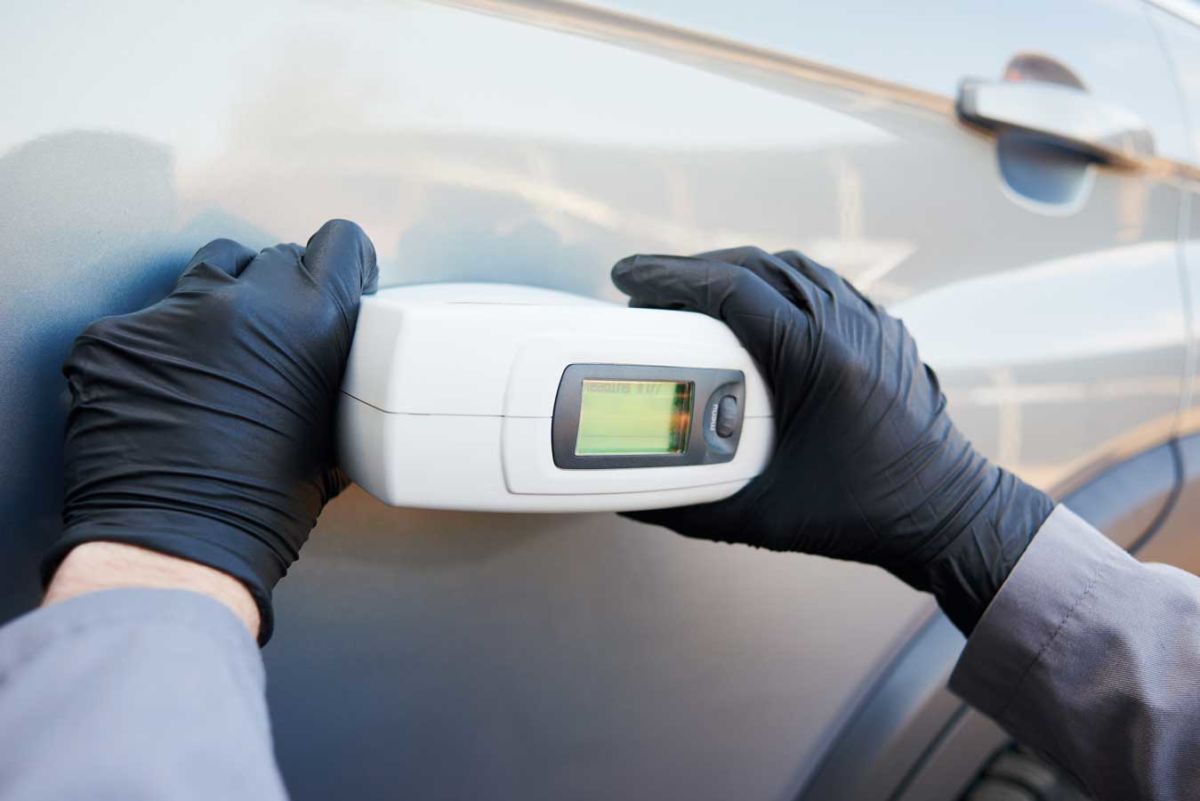
Today's professional auto body shops utilize sophisticated technology to achieve precise color matches. The cornerstone of this technology is the digital spectrophotometer, a device that measures the exact properties of light reflected from your vehicle's surface.
The spectrophotometer process includes:
- Calibration to ensure accurate readings
- Multiple measurements from different panels to account for variations
- Analysis of color data including hue, saturation, and brightness
- Comparison against comprehensive paint databases
- Formula adjustments based on specific vehicle conditions
This technology allows technicians to go beyond what the human eye can detect, identifying subtle nuances in color that might otherwise be missed. Research from PPG Industries, a leading automotive paint manufacturer, indicates that digital color matching technology can detect over 25 million color variations—far more than the human eye can distinguish.
After identifying the precise color formula, skilled technicians use specialized blending techniques to ensure the repaired area seamlessly integrates with the surrounding panels. This often involves feathering the new paint into adjacent areas and carefully controlling the application environment in state-of-the-art paint booths like our 80-foot facility that can accommodate everything from compact cars to RV repair projects.
The Importance of Environmental Controls in Paint Application
The environment where paint is mixed and applied significantly impacts the final result. Professional body shops invest in temperature and humidity-controlled paint booths to ensure consistent application conditions regardless of outside weather.
Even with perfect color matching, proper application requires:
- Thorough surface preparation to remove contaminants
- Precise primer application appropriate for the repair
- Controlled drying and curing conditions
- Multiple thin coats rather than single thick layers
- Professional clear coat application for durability and shine
Temperature fluctuations as small as 5 degrees can affect how paint flows, dries, and ultimately appears. This is why professional facilities maintain strict environmental controls throughout the painting process—ensuring your vehicle's finish looks perfect and lasts for years to come.
Why DIY Paint Matching Often Falls Short
While automotive stores sell touch-up paints and aerosol cans with color codes, these rarely achieve the results of professional paint matching. DIY solutions typically lack the sophisticated color adjustment capabilities, application control, and blending techniques that professional shops offer.
The most common DIY paint matching challenges include:
- Limited color adjustment capability
- Inability to account for weathering and aging
- Inadequate surface preparation tools
- No environmental controls during application
- Lack of professional-grade clear coats
- Insufficient equipment for proper blending
The difference between a professional paint job and a DIY attempt is often immediately visible, affecting both your vehicle's appearance and its resale value.
Ensuring Long-Lasting Results
Professional paint matching isn't just about the immediate appearance—it's about longevity. Properly matched and applied automotive paint should protect your vehicle and maintain its appearance for years to come. This requires not just matching the color but ensuring the paint bonds properly to the surface and receives adequate protection.
At Downtown Autobody, our I-CAR Gold Class certified technicians follow manufacturer-recommended procedures for every step of the paint matching process. This certification ensures our team stays current with the latest techniques and technologies in the rapidly evolving field of automotive finishes.
The final step in any quality paint job is proper curing and finishing. Professional paint booths use controlled heating cycles to ensure complete curing, followed by skilled color sanding and polishing when needed to achieve a factory-like finish that stands the test of time.
OEM Paint Codes
Factory-specific codes ensure accurate base color matching.
Color Matching Tech
Digital spectrophotometers measure precise color properties.
Controlled Environments
Temperature and humidity controlled paint booths for consistency.
Conclusion: The Value of Professional Paint Matching
When it comes to maintaining your vehicle's appearance and value, professional paint matching makes a significant difference. The combination of OEM paint codes, advanced color matching technology, and skilled application techniques ensures repairs that are virtually undetectable.
If your vehicle needs paint repair after a collision or damage, entrusting the work to certified professionals with the right equipment and expertise will provide results that protect both your vehicle's appearance and its long-term value.
Have questions about paint matching or need assistance with vehicle repairs? As your locally owned and operated body shop in Sonoma County, we're here to help. Contact Downtown Autobody today to learn more about our comprehensive auto body services and how we can restore your vehicle to its pre-accident condition.