
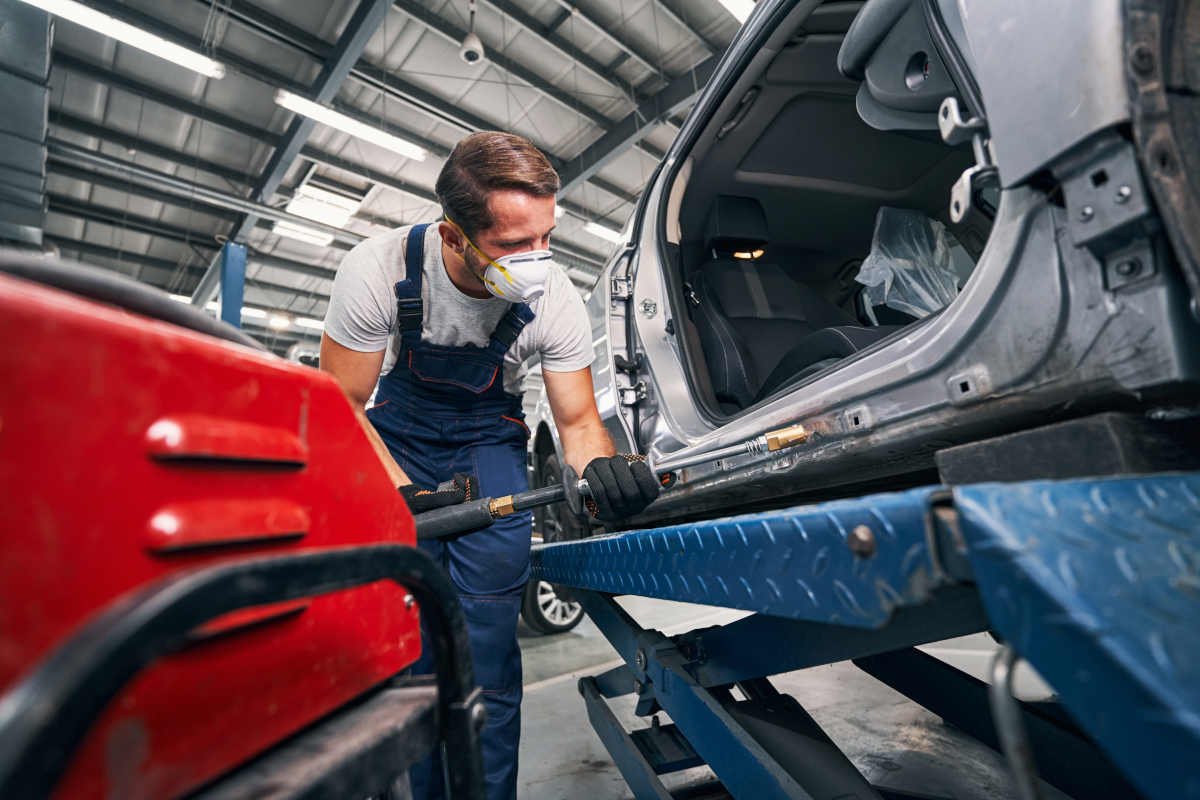
When Sarah from Santa Rosa brought her hybrid sedan to our Rohnert Park shop after a fender bender, she was shocked by the repair estimate—nearly 15% higher than her neighbor’s quote for a similar collision on a gas-only vehicle. “It’s just a bumper,” she said. “Why does having a hybrid battery make such a difference?”
This scenario plays out regularly at collision repair facilities across Sonoma County. As hybrid and electric vehicles become increasingly common on our roads—from Highway 101 commuters to Petaluma backroad drivers—understanding hybrid vs. ICE repairs becomes essential for vehicle owners planning their maintenance budgets and insurance coverage.
| Topic | What You’ll Learn |
|---|---|
| Cost Differences | Why hybrid repairs average 10-15% more than conventional vehicles |
| Technical Complexity | Special equipment and training required for battery-equipped cars |
| Safety Protocols | Critical procedures that protect technicians and your vehicle |
| Local Expertise | What qualifications matter when choosing your repair facility |
Understanding the True Cost Difference Between Hybrid and Traditional Vehicle Repairs
The price gap between hybrid vs. ICE repairs isn’t arbitrary markup—it reflects fundamental differences in vehicle architecture and repair protocols. According to the Inter-Industry Conference on Auto Collision Repair (I-CAR), collision repair facilities must invest in specialized equipment, extensive technician training, and additional safety infrastructure to properly service battery-equipped vehicles.
Internal combustion engine (ICE) vehicles operate on relatively straightforward mechanical and electrical systems that technicians have serviced for decades. Hybrid and electric vehicles, however, integrate high-voltage battery systems—typically 200 to 600 volts—throughout the vehicle’s structure. These batteries often sit beneath the passenger compartment or integrated into the chassis, meaning even minor collisions can require battery system inspection, disconnection procedures, or recalibration.
The financial reality breaks down into several categories. Labor costs increase because certified hybrid technicians command higher wages due to specialized training requirements. Parts typically cost 15-25% more for hybrid-specific components, including reinforced body panels designed to protect battery systems. Shop overhead rises significantly—facilities need insulated tools, high-voltage testing equipment, fire suppression systems rated for lithium-ion fires, and dedicated safe areas for battery disconnection work.
How Does Hybrid Collision Repair Work Differently?
Repairing hybrid vehicles requires fundamentally different protocols than conventional automobiles. Before any structural work begins, technicians must safely disable the high-voltage system—a process requiring specialized diagnostic equipment and strict adherence to manufacturer-specific procedures. One missed step can result in electric shock hazards or catastrophic battery damage.
The hybrid collision repair process includes these critical additional steps:
- High-voltage system isolation: Disconnecting the main battery and verifying zero voltage using specialized multimeters before any repair work begins
- Battery pack inspection: Checking for physical damage, thermal events, or compromise to battery housing integrity that might not be immediately visible
- Structural damage assessment: Evaluating whether impact forces transmitted through the chassis potentially damaged battery mounting points or cooling systems
- System recalibration: After repairs, technicians must reconnect systems and verify proper communication between the battery management system and vehicle computers
- Post-repair testing: Comprehensive electrical diagnostics to ensure all hybrid systems function properly, including regenerative braking and power distribution
- Documentation requirements: Insurance companies often require detailed reports on battery system status and safety verification
The complexity extends beyond the battery itself. Many hybrid vehicles integrate their battery systems with advanced driver assistance systems (ADAS), requiring ADAS calibration after even minor collisions. Sensors, cameras, and radar units positioned around the vehicle must be precisely realigned to factory specifications—work that requires expensive calibration equipment and manufacturer-specific training.
Why Sonoma County Drivers Are Choosing Hybrids Despite Higher Repair Costs
Despite the increased repair expenses, hybrid and electric vehicle adoption continues accelerating throughout Sonoma County. Environmental consciousness runs strong in our region, and many drivers appreciate the fuel economy benefits during commutes between Rohnert Park, Petaluma, and Santa Rosa. The long-term operational savings often outweigh occasional repair cost premiums.
Smart vehicle owners prepare for these realities by ensuring their insurance coverage adequately addresses hybrid repair costs. Standard policies may not fully account for the specialized labor and equipment required, potentially leaving owners with unexpected out-of-pocket expenses after accidents.
When selecting a collision repair facility for your hybrid vehicle, certifications matter significantly. Downtown Autobody maintains I-CAR Gold Class certification—the industry’s highest standard—demonstrating our technicians receive ongoing training on emerging vehicle technologies, including hybrid and electric systems. Our facility includes the only 80-foot downdraft paint booth in Sonoma County, allowing us to complete complex repairs on vehicles of all sizes without compromising quality or extending repair timelines.
The specialized equipment investment required for proper hybrid repairs explains why not all autobody shops accept these vehicles. Facilities need insulated tool sets (standard tools can conduct electricity), megaohmmeters for verifying electrical isolation, manufacturer-specific diagnostic software, and technicians trained in high-voltage safety protocols. These investments represent significant overhead that smaller shops may avoid by declining hybrid work entirely.
What Should You Do If Your Hybrid Needs Repairs?
Understanding the cost factors helps set realistic expectations, but choosing the right repair facility matters more than price alone. Battery-equipped vehicles require shops with proper certifications, equipment, and experience. Cutting corners on hybrid repairs creates safety risks and potentially compromises your vehicle’s sophisticated electrical systems.
Before selecting a repair shop, verify their technicians hold appropriate hybrid vehicle certifications. Ask about their high-voltage safety protocols and dedicated workspace for battery system service. A qualified facility should explain why certain procedures cost more and provide transparent estimates breaking down specialized labor and parts.
Insurance companies increasingly recognize these cost differences, but vehicle owners should proactively discuss coverage adequacy with their agents. Comprehensive policies that account for hybrid-specific repair requirements prevent financial surprises when accidents occur.
Sonoma County’s roads present unique challenges—from congested rush-hour traffic on Highway 101 to narrow country roads where wildlife encounters happen regularly. Whether you drive a Prius, a Chevy Volt, or any battery-equipped vehicle, knowing your repair options before you need them reduces stress when accidents occur.
Cost Differences
Hybrid repairs are 10-15% more expensive due to specialized parts and labor requirements.
Technical Complexity
Requires special equipment and trained technicians to handle high-voltage systems safely.
Safety Protocols
Strict procedures are needed to protect technicians and ensure vehicle safety during repairs.
Making Informed Decisions About Hybrid Vehicle Ownership and Maintenance
The reality of hybrid vs. ICE repairs comes down to this: battery-equipped vehicles cost more to fix because they require specialized knowledge, equipment, and safety protocols that conventional vehicles don’t demand. These aren’t unnecessary expenses—they reflect genuine technical requirements for safely and properly restoring your vehicle.
For Sonoma County drivers committed to hybrid ownership, the environmental benefits, fuel savings, and driving experience often justify the occasional higher repair bill. The key lies in selecting qualified repair facilities and ensuring adequate insurance coverage from the start.
Questions about your vehicle’s repair needs? Whether you drive a hybrid, electric, or conventional vehicle, Downtown Autobody’s certified technicians bring the expertise your car deserves. Our I-CAR Gold Class certification and investment in the latest repair technologies mean we handle everything from minor dent repairs to complex hybrid collision restoration. We also offer loaner vehicles to keep you mobile while we restore your car to pre-accident condition.
Stop by our Rohnert Park facility or call to discuss your specific repair situation. We’ll provide a transparent estimate explaining exactly what your vehicle needs and why—no surprises, just honest expertise from your Sonoma County neighbors.
Frequently Asked Questions About Hybrid vs. ICE Repairs
How much more do hybrid repairs cost compared to regular cars?
Hybrid vehicle repairs typically cost 20-40% more than equivalent conventional vehicles. This difference reflects specialized equipment requirements, certified technician labor, and additional safety protocols for high-voltage systems. Parts costs also run 15-25% higher for hybrid-specific components. The exact premium depends on damage severity and whether battery systems require inspection or service. At Downtown Autobody, we provide detailed estimates breaking down these costs so Sonoma County drivers understand exactly what they’re paying for and why.
Does insurance cover the higher cost of hybrid repairs?
Most comprehensive insurance policies cover hybrid repair costs, but coverage adequacy varies significantly. Standard policies may not fully account for specialized labor and equipment requirements, potentially leaving gaps in coverage. Before purchasing a hybrid vehicle, discuss these specific needs with your insurance agent to ensure your policy adequately covers battery system inspections, high-voltage safety procedures, and specialized parts. Insurance companies increasingly recognize these cost differences, but proactive communication prevents unexpected out-of-pocket expenses after accidents in Rohnert Park or throughout Sonoma County.
How long do hybrid collision repairs take compared to regular cars?
Hybrid repairs typically add 1-3 days to conventional repair timelines due to additional safety protocols and system verification procedures. High-voltage isolation, battery inspection, and post-repair testing require time beyond standard bodywork. Complex repairs involving battery system damage or ADAS recalibration may extend timelines further. However, shops with proper equipment and training—like Downtown Autobody’s I-CAR Gold Class certified facility—complete hybrid repairs efficiently without compromising safety. We also offer loaner vehicles to keep Sonoma County drivers mobile during repairs, minimizing inconvenience regardless of timeline.
Can any auto body shop repair hybrid vehicles?
No—proper hybrid repair requires specialized equipment, certified technicians, and dedicated safety infrastructure that many shops lack. Facilities need insulated tools, high-voltage testing equipment, lithium-ion fire suppression systems, and technicians trained in electrical safety protocols. Shops without these capabilities typically decline hybrid work entirely. When selecting a repair facility in Sonoma County, verify I-CAR certifications, ask about high-voltage safety protocols, and confirm they maintain manufacturer-specific diagnostic equipment. Downtown Autobody’s Gold Class certification and investment in specialized hybrid repair technology ensures we safely handle battery-equipped vehicles.
What happens if a hybrid battery is damaged in an accident?
Battery damage requires immediate professional assessment due to fire and electrical hazards. Certified technicians inspect for physical damage, thermal events, housing compromise, and mounting point integrity. Minor damage may require monitoring and testing, while significant compromise necessitates battery replacement—costs ranging from $2,000 to $8,000 depending on vehicle model. Insurance typically covers accident-related battery damage under comprehensive or collision coverage. Never drive a hybrid with suspected battery damage. Downtown Autobody’s technicians follow strict manufacturer protocols for battery assessment, ensuring your safety and proper documentation for insurance claims throughout Rohnert Park and Sonoma County.
Do hybrid repairs require special safety procedures?
Yes—hybrid vehicles operate at 200-600 volts, requiring strict safety protocols. Technicians must disconnect high-voltage systems before any repair work, verify zero voltage with specialized equipment, use insulated tools, and follow manufacturer-specific procedures. Facilities need dedicated safe areas for battery work and fire suppression systems rated for lithium-ion fires. These aren’t optional precautions—they’re essential for technician safety and preventing catastrophic battery damage. Shops lacking proper protocols risk electric shock, fires, and vehicle system damage. Downtown Autobody maintains comprehensive safety infrastructure and ongoing technician training for safe hybrid repair service.
Is it worth repairing a hybrid after a collision or should I replace it?
This depends on damage severity, vehicle age, and battery system condition. If repair costs exceed 70-75% of vehicle value, insurance companies typically declare total loss. However, many hybrid collisions involve repairable damage where battery systems remain intact, making repair financially sensible. Modern hybrid batteries last 10-15 years, so vehicles with healthy batteries justify repair investment. A qualified shop provides transparent damage assessment and repair-versus-replace guidance. Downtown Autobody evaluates structural damage, battery condition, and cost-effectiveness honestly, helping Sonoma County hybrid owners make informed decisions without pressure to pursue unnecessary repairs.