
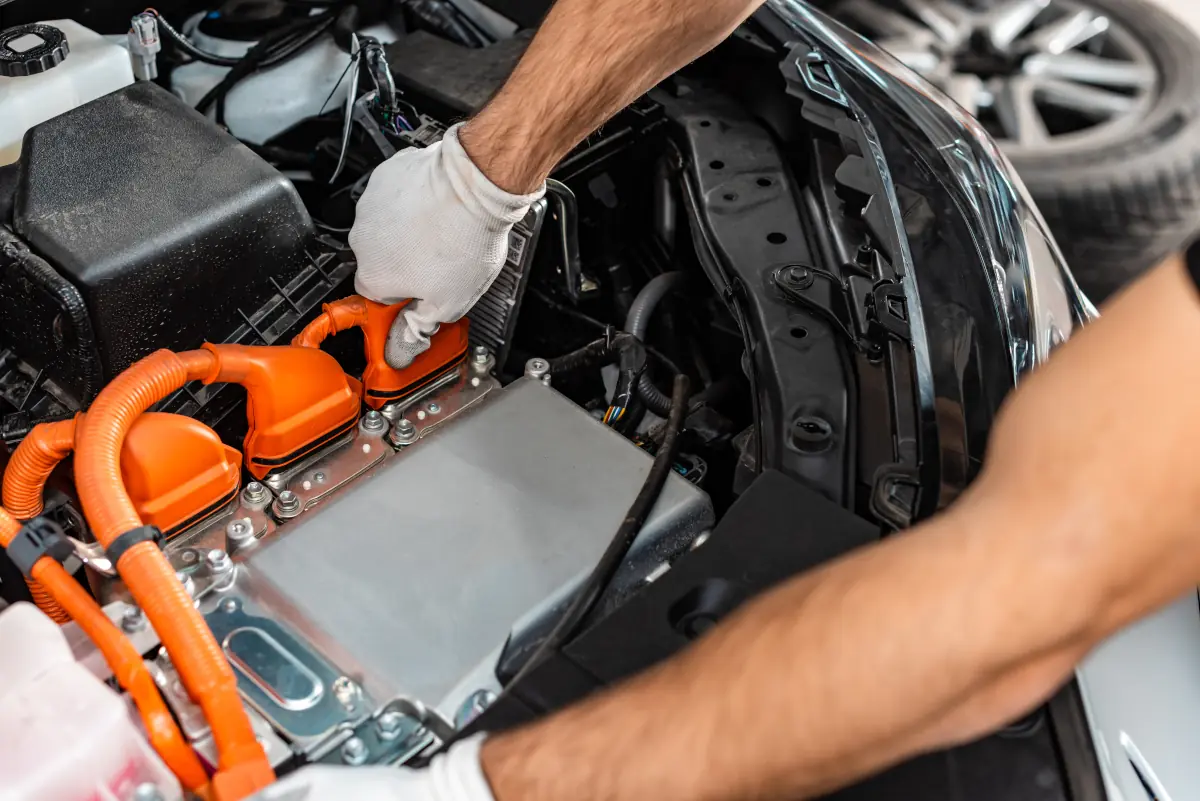
When your electric vehicle needs structural repairs after a collision, understanding what happens to your EV battery is crucial for your safety and peace of mind. As more Tesla, Rivian, and electric Ford vehicles populate Sonoma County roads, collision repair shops must follow strict protocols to protect both the vehicle’s high-voltage battery system and repair technicians. At Downtown Autobody in Rohnert Park, our I-CAR Gold Class certification ensures we handle EV battery safety during structural repairs with the specialized training and equipment these advanced vehicles demand.
| Topic | What You’ll Learn |
|---|---|
| Battery Disconnection Protocols | Why EVs require immediate high-voltage system isolation |
| Structural Repair Considerations | How battery placement affects collision repair procedures |
| Safety Testing Requirements | Post-repair inspections that protect your investment |
| Local EV Repair Expertise | What makes Sonoma County shops qualified for EV work |
Understanding EV Battery Systems in Collision Repair
Electric vehicle batteries store tremendous energy—often 60-100 kilowatt-hours—at voltages exceeding 400 volts. According to the National Highway Traffic Safety Administration, these high-voltage systems require specific safety procedures during collision repairs that differ significantly from traditional vehicles. The battery pack typically mounts underneath the passenger compartment, integrated into the vehicle’s structural floor, which means structural damage often occurs near or around the battery enclosure.
When a collision affects your EV’s structure, the battery becomes a primary safety concern. Even minor structural damage can compromise the battery casing’s integrity, potentially exposing high-voltage components or damaging individual battery cells. Qualified collision repair facilities must assess battery condition before beginning any structural work, as hidden battery damage poses fire risks and electrical hazards throughout the repair process.
Modern EVs include multiple safety systems designed to protect the battery during impacts, including automatic disconnection switches and reinforced battery enclosures. However, these protective measures don’t eliminate the need for thorough post-collision inspection and proper handling during repairs.
How Do Technicians Handle EV Batteries During Structural Repairs?
Before any structural repair begins, certified technicians must safely disconnect and isolate the high-voltage battery system following manufacturer-specific procedures that can take 30-60 minutes to complete properly. This critical first step eliminates electrical hazards and prevents accidental battery damage during the repair process.
The battery handling process during structural repair includes:
- High-Voltage Disconnection: Technicians disable the main battery contactors and remove service plugs, then wait for capacitors to discharge completely before proceeding
- Battery Inspection: Visual and diagnostic scans check for physical damage, thermal events, or compromised cell integrity that could indicate safety risks
- Protective Isolation: The battery area receives protective covering and barriers to prevent welding sparks, grinding debris, or frame straightening stress from affecting battery components
- Structural Measurements: Precise measurements ensure frame repairs don’t distort the battery mounting area, which could stress the battery casing or electrical connections
- Removal When Required: Severe undercarriage damage may require complete battery removal, which involves specialized lifting equipment and manufacturer protocols
- Post-Repair Testing: After structural work completes, technicians perform insulation resistance tests and voltage checks before reconnecting the high-voltage system
Our autobody shop maintains the specialized diagnostic equipment required to communicate with EV battery management systems, ensuring we can properly assess battery health throughout the repair process.
What Happens If the EV Battery Is Damaged?
If inspection reveals battery damage, the repair approach changes significantly. Unlike traditional mechanical components, EV batteries cannot be partially repaired—damaged battery modules or packs typically require complete replacement. Insurance companies receive detailed documentation including diagnostic trouble codes, insulation resistance measurements, and thermal imaging results that justify battery replacement decisions.
Battery damage indicators include physical deformation of the battery case, diagnostic codes indicating cell imbalance, insulation resistance below manufacturer specifications, or evidence of thermal events. These conditions make the vehicle unsafe to drive and require battery replacement before structural repairs can proceed.
EV Structural Repair Expertise in Sonoma County
Sonoma County’s growing electric vehicle population requires collision repair facilities with specific EV training and equipment. Our Rohnert Park location serves EV owners from Petaluma to Santa Rosa with technicians who complete ongoing manufacturer-specific training for Tesla, Rivian, Ford Mustang Mach-E, and other popular electric vehicles in our area.
The I-CAR Gold Class certification we maintain requires annual training updates specifically addressing EV safety procedures and battery handling protocols. This commitment to continuing education ensures our team stays current with rapidly evolving EV technology and manufacturer repair requirements. Understanding why certification matters helps vehicle owners recognize qualified repair facilities.
Our facility’s 80-foot paint booth—the only one of its size in Sonoma County—provides adequate space for EV repairs that often involve larger vehicle footprints and the specialized equipment required for battery system work. This capability means your EV receives proper repairs without compromising safety protocols due to space limitations.
Working with EVs also requires specialized tools including insulated hand tools rated for high-voltage work, battery lift tables capable of supporting 1,000+ pound battery packs, thermal imaging cameras for detecting battery hot spots, and manufacturer-specific diagnostic software. These investments distinguish shops truly equipped for EV collision repair from those attempting to adapt traditional repair methods to electric vehicles.
The Future of EV Collision Repair
As battery technology evolves, repair procedures continue advancing. Some newer EVs feature structural battery packs where the battery casing serves as part of the vehicle’s frame structure. These designs require even more specialized repair approaches, as traditional frame straightening methods cannot apply to battery-integrated structures.
California’s accelerating transition to electric vehicles means Sonoma County drivers will increasingly need collision repair facilities with proven EV expertise. When selecting a repair shop for your electric vehicle, verify their technicians maintain current EV-specific certifications and their facility includes the specialized equipment required for safe battery handling. You can learn more about what makes facilities qualified by exploring what ADAS calibration involves, as many EVs combine advanced driver assistance systems with electric powertrains.
Battery Disconnection
Ensuring high-voltage isolation to prevent hazards.
Structural Assessment
Evaluating battery placement impact on repairs.
Safety Inspections
Post-repair checks for safety and functionality.
Protecting Your EV Investment
Your electric vehicle represents significant investment in advanced technology that requires equally advanced repair expertise. Understanding what happens to your EV battery during structural repairs helps you make informed decisions about where to trust your vehicle. Proper battery handling protocols protect your safety, preserve your vehicle’s warranty coverage, and ensure your EV performs as designed after collision repairs.
Questions about your vehicle’s repair needs? Whether you’re driving a Tesla through downtown Rohnert Park, a Rivian exploring Sonoma County’s backroads, or any electric vehicle requiring collision repairs, Downtown Autobody’s certified technicians bring the specialized knowledge your EV demands. Our commitment to proper EV battery safety protocols means you can trust your vehicle receives repairs that meet manufacturer standards and protect your investment.
Contact our team to discuss your electric vehicle’s specific repair requirements. We’ll explain exactly how we’ll handle your EV battery throughout the structural repair process, providing the transparency and expertise Sonoma County drivers deserve.
Frequently Asked Questions About EV Battery Safety During Collision Repair
How much does EV battery replacement cost after a collision?
EV battery replacement costs typically range from $5,000 to $20,000 depending on the vehicle make, model, and battery capacity. Tesla Model 3 batteries generally cost $7,000-$15,000, while larger batteries in vehicles like the Rivian R1T can exceed $20,000. Most collision-related battery damage is covered by comprehensive or collision insurance policies. At Downtown Autobody in Rohnert Park, we work directly with insurance companies to document battery damage and streamline the claims process for Sonoma County EV owners, ensuring you understand all costs before repairs begin.
Can I drive my EV if the battery was damaged in an accident?
No, you should not drive an EV with suspected battery damage. Even minor battery damage can create fire risks, electrical hazards, or sudden power loss while driving. If your EV displays battery warning lights, error messages, or was involved in a collision affecting the undercarriage, have it towed to a certified repair facility. Downtown Autobody’s technicians can perform immediate safety assessments to determine if your battery sustained damage. We serve Sonoma County communities including Petaluma, Santa Rosa, and Rohnert Park with specialized EV diagnostic equipment that identifies battery issues other shops might miss.
How long does structural repair take on an electric vehicle?
EV structural repairs typically take 2-4 weeks depending on damage severity, parts availability, and whether battery removal is required. The additional time compared to traditional vehicles accounts for battery disconnection protocols (1-2 days), specialized frame measurements to protect battery mounting areas, and post-repair high-voltage system testing. Severe damage requiring battery replacement can extend repairs to 4-6 weeks due to battery procurement. Our I-CAR Gold Class certified team at Downtown Autobody provides detailed timelines specific to your vehicle and keeps you updated throughout the repair process.
What certifications should an EV collision repair shop have?
Look for I-CAR Gold Class certification, which requires ongoing training in EV safety protocols and battery handling. Manufacturer-specific certifications (Tesla Approved, Ford Electric Vehicle Certified) indicate additional specialized training. Technicians should hold ASE certifications and complete regular updates on high-voltage system procedures. Downtown Autobody maintains I-CAR Gold Class status with technicians trained specifically for Tesla, Rivian, Ford Mach-E, and other EVs popular in Sonoma County. We invest in the specialized diagnostic equipment and insulated tools required for safe EV repairs, not just certifications on paper.
Will collision repairs void my EV battery warranty?
Collision repairs performed by certified shops following manufacturer procedures will not void your EV battery warranty. However, improper repairs by uncertified facilities can void warranty coverage. Most EV manufacturers require specific disconnection procedures, diagnostic protocols, and reconnection tests that must be documented. At Downtown Autobody, we follow all manufacturer-specific repair procedures and maintain detailed records that protect your warranty. Our facility uses OEM-approved methods for battery handling, ensuring your Tesla, Rivian, or electric Ford maintains full warranty coverage after repairs are completed.
How do repair shops test EV batteries after structural repairs?
Post-repair battery testing includes insulation resistance measurements (ensuring proper electrical isolation), voltage balance checks across battery modules, diagnostic scans for trouble codes, thermal imaging to detect hot spots, and functional testing of the battery management system. These tests verify the battery wasn’t damaged during repairs and all safety systems function properly. Downtown Autobody’s diagnostic equipment connects directly to your EV’s battery management system, performing the same tests dealerships use. We provide documentation of all test results, giving you confidence your vehicle is safe before you drive away from our Rohnert Park facility.
What happens to my EV battery during frame straightening?
Before frame straightening begins, technicians completely disconnect and isolate the high-voltage battery system. Protective barriers shield the battery area from welding sparks, grinding debris, and frame straightening forces. Precise measurements ensure frame corrections don’t distort the battery mounting surface, which could stress the battery casing or electrical connections. In cases of severe undercarriage damage, the entire battery pack may be removed using specialized lifting equipment before frame work begins. Our 80-foot paint booth at Downtown Autobody provides the space needed for these complex procedures, ensuring your Sonoma County EV receives proper repairs without compromising battery safety.