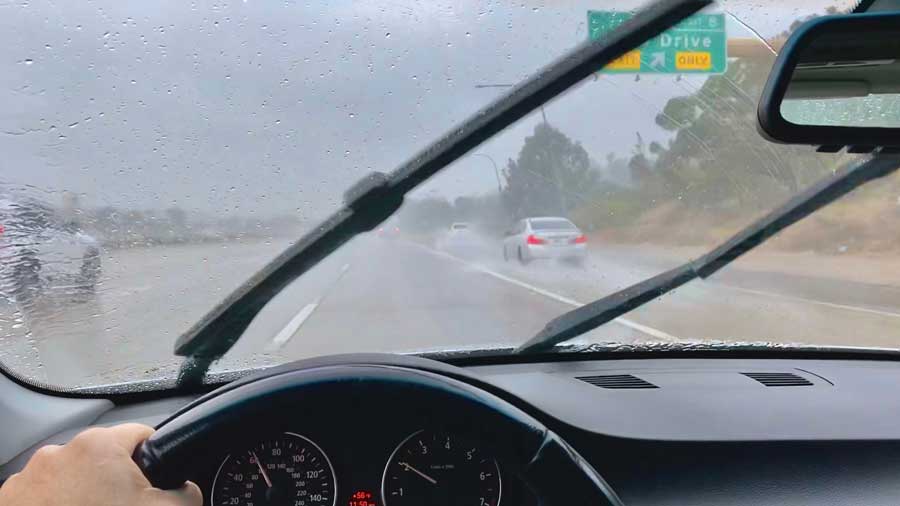
Navigating the rolling hills of Sonoma County during wet weather presents unique challenges that can affect your vehicle's performance and safety. As your local auto body experts at Downtown Autobody, we've seen firsthand how proper driving techniques during rainy and foggy conditions can prevent accidents and costly repairs. Understanding how your vehicle—whether front-wheel drive, rear-wheel drive, or all-wheel drive—responds to wet roads can make all the difference in maintaining control and avoiding collisions.
| Weather Condition | Key Safety Points |
|---|---|
| Heavy Rain | Reduce speed by 30%, increase following distance to 5-6 seconds, avoid standing water |
| Dense Fog | Use low beams (not high beams), reduce speed significantly, use fog lights when available |
| Frozen Bridges | Approach with extreme caution, avoid sudden braking/acceleration, cross at steady speed |
| Rolling Hills | Maintain lower gear on descents, avoid hard braking on curves, watch for water accumulation |
Understanding How Rain Affects Different Drive Systems
Front-wheel drive, rear-wheel drive, and all-wheel drive vehicles each respond differently to wet road conditions. In rainy weather, front-wheel drive vehicles generally provide better traction as the weight of the engine sits above the drive wheels. This configuration helps prevent hydroplaning in moderate rain conditions, but drivers should still exercise caution.
Rear-wheel drive vehicles require extra attention during wet weather driving. The lighter front end can make steering more challenging on slick surfaces, and the propensity for the rear wheels to lose traction can lead to oversteer—a condition where the back end of the vehicle slides outward during turns. According to the National Highway Traffic Safety Administration, rear-wheel drive vehicles are more susceptible to loss of control in wet conditions, requiring drivers to be especially gentle with acceleration.
Regardless of your drive system, when facing heavy downpours common in Northern California's winter months, reducing your speed is essential. Even the most advanced traction control systems cannot fully compensate for the reduced friction between your tires and wet asphalt. This is particularly important when approaching our region's many bridges, which freeze before regular road surfaces due to air circulation above and below the structure—creating the dangerous "frozen bridge" phenomenon that catches many drivers off guard.
Essential Techniques for Navigating Fog and Rain
Foggy conditions, particularly common in our coastal areas and rolling hills of Sonoma County, require specific driving adjustments to ensure safety. When visibility is compromised, your reaction time becomes even more critical to preventing collisions that might require professional auto body repair services.
When driving in fog or heavy rain, remember these crucial safety measures:
- Always use low beam headlights in fog, as high beams will reflect off water droplets and reduce visibility further rather than improving it.
- Maintain at least double the normal following distance, giving yourself more time to react to sudden stops or hazards ahead.
- Reduce your speed significantly, even below posted limits if necessary, as stopping distances increase dramatically on wet surfaces.
- Turn off cruise control in wet conditions to maintain full manual control over acceleration and deceleration.
- Watch the right edge line of the road as a guide rather than the center line to avoid being blinded by oncoming headlights in fog.
These precautions become even more important when navigating the rolling hills characteristic of Sonoma County. Downhill sections can become particularly treacherous when wet, as water tends to accumulate at the bottom of hills and in dips in the road. Maintaining a lower gear while descending hills provides additional engine braking and helps prevent your wheels from locking if you need to slow down suddenly.
Special Considerations for Northern California Drivers
Northern California's unique geography creates specific driving challenges during wet weather. The combination of coastal fog, winding roads, and elevation changes requires heightened awareness and specialized techniques to navigate safely.
- Bridge surfaces freeze faster than regular roadways, creating "black ice" that's virtually invisible—reduce speed before crossing bridges during near-freezing temperatures.
- When encountering a sudden downpour, gradually reduce speed rather than braking sharply, which can trigger hydroplaning or skidding.
- Drive in the tracks of the vehicle ahead when possible, as these paths will have less standing water and better traction.
- Be especially cautious during the first rainfall after a dry spell, when oil residue creates extremely slippery conditions before it washes away.
- Consider investing in all-weather or rain-specific tires if you frequently drive in wet conditions, as they provide significantly improved wet traction.
The rolling hills of Sonoma County present particular challenges in wet conditions. When descending wet hills, avoid riding your brakes, which can cause them to overheat and lose effectiveness. Instead, shift to a lower gear before the descent begins and use your brakes intermittently as needed. This technique is especially important for drivers of rear-wheel-drive vehicles, which can be more prone to fishtailing on wet downhill sections.
Front-wheel drive vehicles generally perform better on wet uphill climbs, but can still lose traction if acceleration is too aggressive. Apply gentle, steady pressure to the accelerator to maintain forward momentum without spinning the wheels. If you feel your wheels beginning to slip, easing off the accelerator slightly often provides better results than pressing harder.
What To Do If You Experience Hydroplaning
Hydroplaning—when your tires lose contact with the road and skim across a film of water—can be terrifying for any driver. This dangerous condition occurs most often during the first 10 minutes of light rain, when water mixes with oil residue on the road surface, creating an extremely slippery condition.
If you find yourself hydroplaning, follow these critical steps:
- Stay calm and avoid making sudden movements with the steering wheel or slamming on the brakes, which will likely worsen the situation.
- Gently ease off the accelerator to gradually slow down without applying brakes, allowing your tires to regain contact with the road surface.
- Hold the steering wheel straight and maintain your vehicle's direction until you feel traction returning.
- If braking is necessary, apply gentle pressure with anti-lock brakes, or pump standard brakes lightly to avoid locking up.
The best approach, however, is prevention. Regular tire maintenance is crucial for wet weather driving safety. Tires with less than 2/32" of tread depth significantly increase hydroplaning risk and should be replaced immediately. Maintaining proper tire inflation is equally important—overinflated tires reduce the contact patch with the road, while underinflated tires can't effectively channel water away from beneath the tread.
Being prepared for emergency situations is also essential. If you do experience a collision due to wet weather conditions, knowing what to do afterward can minimize stress and additional damage. Our team at Downtown Autobody provides comprehensive loaner car services while your vehicle undergoes repairs, ensuring you maintain mobility even after an unfortunate incident.
Wet Weather Driving
Reduce speed and increase following distance in heavy rain to prevent accidents.
Fog Navigation
Use low beam headlights and keep a safe distance to improve visibility in fog.
Handling Hydroplaning
Stay calm, ease off the accelerator, and steer straight to recover traction.
Frozen Bridges
Approach bridges with care, maintain speed and avoid sudden movements.
Conclusion: Staying Safe in All Conditions
Wet weather driving in Sonoma County's diverse terrain requires awareness, preparation, and appropriate driving techniques. By understanding how your specific vehicle handles in rain, fog, and on frozen bridges, you can significantly reduce your risk of collision and the need for auto body repairs.
Regular maintenance of your vehicle's safety systems—particularly tires, wipers, brakes, and lights—plays a crucial role in wet weather driving safety. Remember that even minor collisions can cause unseen damage that might affect your vehicle's structural integrity or safety systems.
At Downtown Autobody, our partnership-owned business is committed to keeping our community safe on the road through education and professional repair services. Our I-CAR Gold Class certified technicians understand the unique challenges of driving in Northern California and are ready to help with any questions about maintaining your vehicle's safety in all weather conditions. If you have concerns about your vehicle's performance in wet conditions or need assistance after a weather-related incident, don't hesitate to reach out to our team for expert guidance.