
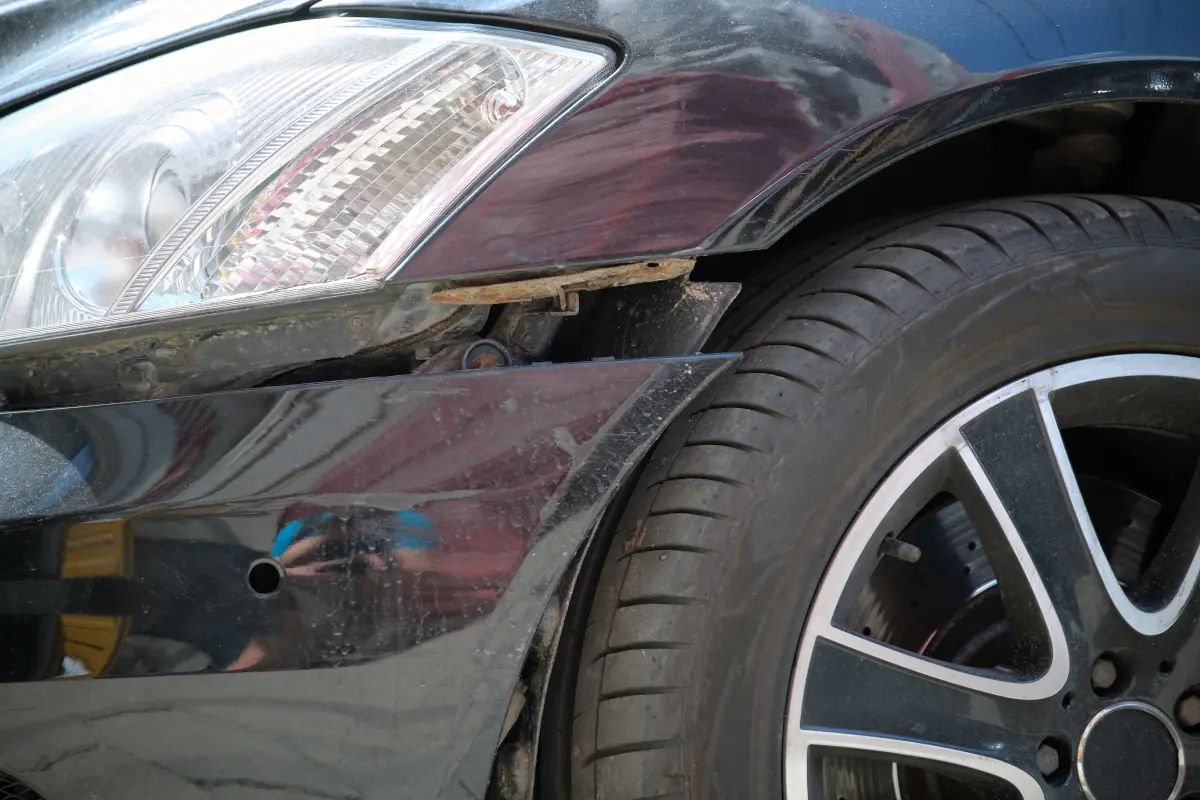
You back into a parking block at the Cotati shopping center. There’s a small scuff on your rear bumper — nothing dramatic. A buddy tells you, “Just grab some touch-up paint, it’ll be fine.” And for a 1998 pickup truck, that advice might hold up. But if your vehicle has blind spot monitoring, rear cross-traffic alerts, or parking assist sensors built into that bumper? That small scuff just became a serious safety issue that a $12 bottle of paint simply cannot fix.
Blind spot monitoring repair is one of the most misunderstood services in modern collision repair. Drivers across Sonoma County are unknowingly driving with compromised safety systems every day — all because a bumper looked fine on the outside. This guide breaks down exactly what happens to your sensors when your rear bumper takes a hit, why cosmetic fixes fall short, and what proper repair actually looks like.
| Topic | What You’ll Learn |
|---|---|
| How Bumper Sensors Work | Why blind spot and parking sensors live inside your bumper — and what disrupts them |
| Why Paint Alone Fails | How improper refinishing and structural damage silently disable ADAS features |
| Proper Repair Process | What sensor-safe refinishing and ADAS calibration actually involve |
| Local Expertise | How Downtown Autobody in Rohnert Park handles these repairs for Sonoma County drivers |
Your Bumper Is a Technology Platform — Not Just Plastic
Modern rear bumpers are far more than cosmetic shells. Behind that painted plastic cover sits a carefully engineered array of technology: radar modules for blind spot detection, ultrasonic sensors for parking assist, and sometimes even camera housings for rear cross-traffic alert systems. These components are positioned with millimeter-level precision by engineers during vehicle design. They expect to operate through a specific bumper material, at a specific thickness, with a specific paint type applied on top.
When your bumper takes a hit — even a light one — several things can go wrong simultaneously. The plastic bumper cover may crack or deform. The radar sensor bracket behind it can shift slightly. The foam energy absorber underneath may compress and never fully return to shape. Any one of these changes can misalign a sensor enough to produce false warnings, missed detections, or complete system failure. According to the National Highway Traffic Safety Administration (NHTSA), ADAS technologies like blind spot monitoring and rear cross-traffic alert are proven to reduce lane-change crashes and backing collisions — but only when they’re functioning correctly.
The hidden danger is this: your dashboard warning light may never come on. The system can appear to work while producing unreliable results. A sensor that’s off by just a few degrees may still chirp and flash — but it might miss a motorcycle in your blind spot or fail to detect a child running behind your SUV in a Petaluma parking lot. Proper blind spot monitoring repair addresses the root cause, not just the surface.
Does Repainting a Bumper Affect Blind Spot Sensors?
Yes, repainting a bumper can directly affect blind spot sensors and radar-based systems. Automotive radar sensors transmit signals through the bumper cover. If paint is applied too thick, contains metallic flake in the wrong concentration, or is layered unevenly over sensor locations, it can block or scatter the radar signal — causing sensor malfunction or complete failure.
This is why sensor-safe refinishing is a specific skill set — not just standard bodywork. At a quality collision repair facility, technicians follow manufacturer guidelines for paint type, thickness, and application over radar sensor zones. It’s one of the reasons that choosing an I-CAR Gold Class certified shop matters so much for vehicles equipped with modern safety technology.
Here’s what a proper blind spot monitoring repair and bumper refinishing process actually involves:
- Full damage assessment: A trained technician inspects not just the bumper cover, but the sensor brackets, foam absorber, and rear fascia structure underneath for hidden damage.
- Plastic repair vs. replacement decision: Minor flex-panel cracks may be repairable. Damage near or behind sensor mounting points typically requires a full bumper cover replacement to restore proper sensor positioning.
- Sensor removal and inspection: Radar and ultrasonic sensors are removed before refinishing begins. Each unit is inspected for physical damage or moisture intrusion from the impact.
- Sensor-safe paint application: Paint is applied using manufacturer-approved materials and thickness specifications over radar transmission zones. Metallic and pearl paints require special attention to keep radar interference within acceptable limits.
- Reinstallation with torque specs: Sensors are reinstalled to precise torque specifications. Bracket alignment is verified before the bumper cover goes back on the vehicle.
- ADAS calibration after collision: Once the bumper is reassembled, the blind spot monitoring system — and any other affected ADAS features — must be recalibrated using manufacturer-specific diagnostic equipment. This is the step that most quick-fix shops skip entirely.
- Functional verification: The system is tested on the road or with specialized targets to confirm the sensor field of view and detection range meet factory specifications.
Want a deeper look at what the calibration process involves? Our guide on what ADAS calibration is and why it matters walks through the full procedure in plain language.
Why This Matters Specifically for Sonoma County Drivers
Sonoma County roads present a unique mix of driving environments. You might cruise Highway 101 through Rohnert Park with heavy merge traffic one minute, then navigate the narrow two-lane roads near Sebastopol or Bodega Bay the next. Blind spot monitoring earns its keep in both situations. When that system is compromised after a bumper scuff, you’re taking on real risk — often without knowing it.
We also see a specific pattern at Downtown Autobody: drivers who came in after having a bumper “fixed” somewhere else. They had the scuff painted over. The car looked great. But the blind spot warning light came on a week later, or worse — the system stopped alerting them entirely and they only discovered it by accident. Undoing a poorly executed repair costs more than doing it right the first time.
Downtown Autobody’s full-service auto body shop in Rohnert Park is built for exactly these repairs. As an I-CAR Gold Class certified facility, our technicians complete ongoing training in sensor-safe repair procedures and ADAS recalibration requirements. We stay current with the specific calibration procedures for the vehicles Sonoma County drivers actually own — from Toyota RAV4s to Honda CR-Vs to Ford F-150s, all of which carry increasingly sophisticated rear sensor arrays.
Our facility also houses the only 80-foot paint booth in Sonoma County. That’s not just a number — it means we have the space and airflow control to apply paint properly on larger vehicles and perform meticulous, sensor-zone-specific refinishing without shortcuts. For SUVs, trucks, and crossovers where rear sensors are especially common, that capability makes a real difference in repair quality.
If you’re also dealing with front-end damage or camera-based ADAS features affected by a collision, take a look at our overview of ADAS calibration after collision repairs — the same principles apply to forward-facing radar and camera systems.
The Bottom Line: Your Safety System Deserves a Real Fix
Touch-up paint has its place. Covering a door ding on a vintage truck? Absolutely. But the moment your vehicle has blind spot monitoring, rear cross-traffic alert, or parking assist sensors embedded in that bumper, you’re dealing with safety-critical technology. A cosmetic fix that ignores rear bumper sensor calibration, sensor positioning, and paint interference isn’t a repair — it’s a temporary cover-up that leaves you exposed.
The good news is that proper blind spot monitoring repair isn’t mysterious or impossibly expensive when done by a shop that actually knows what they’re doing. It requires the right training, the right equipment, and the discipline to follow manufacturer procedures from start to finish — including the ADAS calibration step that makes the whole system trustworthy again.
Sonoma County drivers deserve repairs that restore their vehicles completely — inside and out, cosmetically and functionally. At Downtown Autobody, that’s the only standard we work to.
Questions about your vehicle’s repair needs? Whether you’re not sure if your bumper damage affected your sensors, or you’ve already noticed a warning light after a previous repair, we’re happy to take a look. Stop by our shop in Rohnert Park, give us a call, or reach out through our contact page to schedule an assessment. No pressure — just straight answers from people who know these systems.
Blind Spot Monitoring Repair FAQ
Can a small bumper scuff damage blind spot sensors?
Yes. Even minor bumper impacts can shift radar sensor brackets, compress foam absorbers, or deform the bumper cover enough to affect blind spot monitoring accuracy. Many systems continue operating without triggering a dashboard warning, making hidden damage difficult to detect.
Does repainting a bumper affect blind spot monitoring?
It can. Radar sensors transmit signals through the bumper cover, and improper paint thickness or metallic paint application can interfere with those signals. Manufacturer-approved refinishing procedures are required to avoid sensor malfunction.
Why isn’t touch-up paint enough after a bumper hit?
Touch-up paint only addresses cosmetic damage. It does not correct sensor alignment issues, hidden structural damage, or recalibrate ADAS systems like blind spot monitoring and rear cross-traffic alerts.
What is involved in proper blind spot monitoring repair?
Proper repair includes inspecting hidden bumper damage, removing and checking sensors, applying sensor-safe paint, reinstalling components to factory specifications, and performing ADAS calibration to restore accurate operation.
Do blind spot sensors need calibration after a collision?
Yes. After bumper repairs or sensor removal, blind spot monitoring systems must be recalibrated using manufacturer-specific equipment. Skipping calibration can result in inaccurate warnings or missed detections.
Can blind spot monitoring fail without a warning light?
Yes. A sensor can be slightly misaligned and still appear functional while producing unreliable results. That means the system may miss vehicles, motorcycles, or pedestrians even if no warning light appears on the dashboard.
What vehicles commonly have rear bumper sensors?
Most modern SUVs, trucks, and crossovers include rear bumper sensors for blind spot monitoring, parking assist, or rear cross-traffic alerts. Popular examples include the Toyota RAV4, Honda CR-V, and Ford F-150.
How do I know if my bumper repair shop understands ADAS systems?
Look for shops with I-CAR Gold Class certification, manufacturer repair procedure access, and ADAS calibration capabilities. Proper sensor-safe refinishing and calibration equipment are essential for modern collision repairs.