
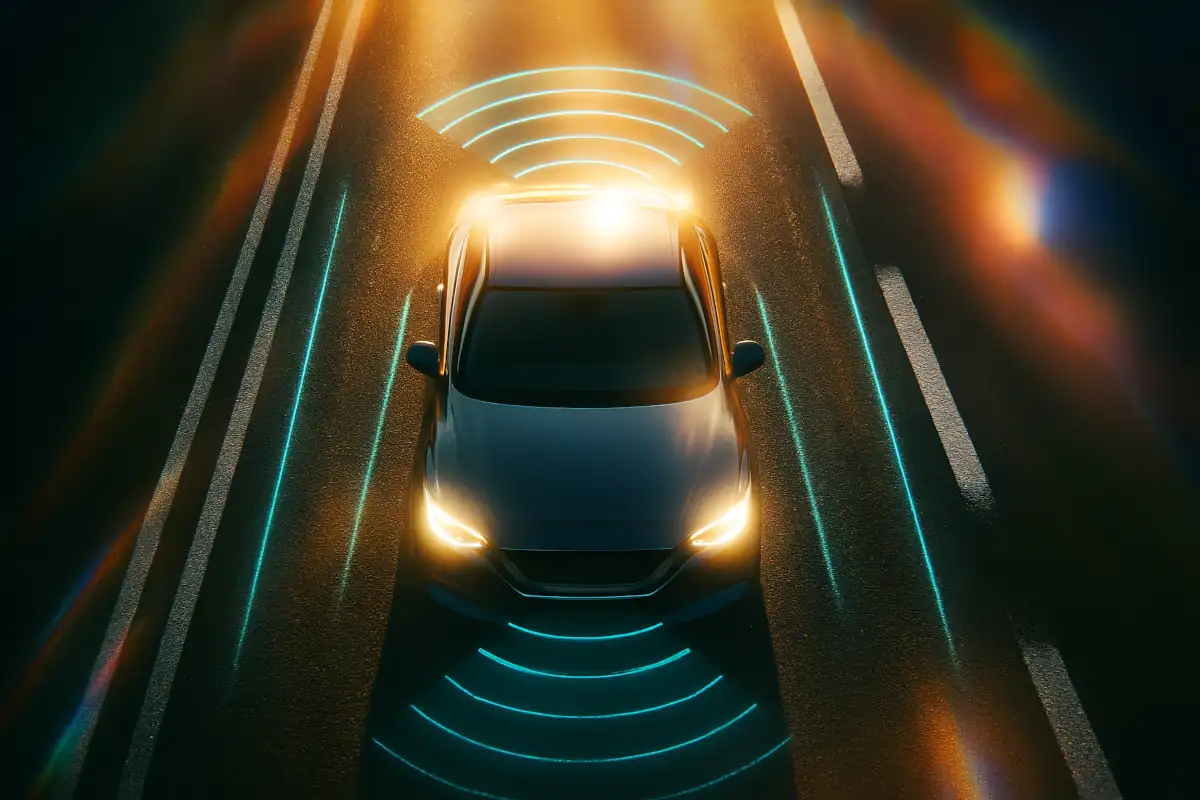
When your car’s safety systems keep you from drifting into another lane on Highway 101 or automatically brake when traffic suddenly stops on Rohnert Park Expressway, that’s Advanced Driver Assistance Systems (ADAS) at work. But here’s what many Sonoma County drivers don’t realize: even minor collision repairs can throw these life-saving systems dangerously out of alignment. ADAS recalibration isn’t just recommended after bodywork—it’s a critical safety requirement that could mean the difference between accident prevention and system failure when you need it most.
At Downtown Autobody in Rohnert Park, we see vehicles every week whose ADAS systems were never properly recalibrated after repairs at other shops. The consequences range from warning lights that won’t clear to safety systems that fail completely at highway speeds.
| Topic | What You’ll Learn |
|---|---|
| What ADAS Really Does | Understanding the cameras and sensors protecting you daily |
| When Recalibration Is Required | Repairs that affect your vehicle’s safety systems |
| The Recalibration Process | How certified technicians restore system accuracy |
| Why Proper Equipment Matters | The technology and space needed for precise calibration |
Why Your Vehicle’s Safety Systems Need Perfect Alignment
Advanced Driver Assistance Systems rely on a network of precisely positioned cameras, radar sensors, and ultrasonic detectors strategically placed around your vehicle. That forward-facing camera mounted behind your rearview mirror? It monitors lane markings and approaching vehicles within millimeters of accuracy. The radar sensors in your front bumper? They calculate closing distances to objects ahead with split-second timing.
According to the Insurance Institute for Highway Safety (IIHS), vehicles equipped with forward collision warning and automatic emergency braking reduce rear-end crashes by 50%. But these impressive safety statistics only hold true when systems are correctly calibrated. Even a one-degree change in camera angle can cause your lane departure warning to misread road markings by several feet at highway speeds—potentially steering you toward danger instead of away from it.
Think about the last time you had your windshield replaced or your front bumper repaired. These common services directly impact ADAS components. When technicians remove a windshield, they’re disconnecting the camera that manages your adaptive cruise control, collision warning, and automatic emergency braking. When they replace a bumper, they’re disturbing radar sensors that judge distances to other vehicles. Without recalibration, these systems may appear to function normally but operate with dangerous inaccuracies.
The stakes are particularly high here in Sonoma County, where we navigate everything from foggy morning commutes on Highway 12 to unpredictable traffic patterns around the Costco intersection in Rohnert Park. Your ADAS features are designed to compensate for human reaction time in these challenging conditions—but only when they’re working correctly.
How Does ADAS Recalibration Work?
ADAS recalibration is a precise diagnostic process where certified technicians use specialized equipment to reset your vehicle’s safety sensors and cameras to manufacturer specifications, ensuring they accurately detect road conditions, lane markings, and potential hazards. This process requires both technical expertise and proper facility specifications that many repair shops simply don’t have.
The recalibration process involves several critical steps:
- Static calibration: Your vehicle is positioned in a space with specific dimensional requirements—typically requiring at least 20 feet of unobstructed space in front and a level floor surface. Technicians place manufacturer-specified targets at exact distances and angles while specialized diagnostic equipment communicates with your vehicle’s computer systems.
- Dynamic calibration: For many systems, technicians must drive the vehicle at specific speeds on particular road types, allowing onboard computers to verify that sensors are reading real-world conditions accurately.
- Multi-system verification: Modern vehicles often have 5-10 different ADAS features that must all work in harmony. Technicians verify each system individually, then confirm they interact correctly with each other.
- Diagnostic confirmation: Using factory-level scan tools that cost tens of thousands of dollars, technicians document that every safety system meets the vehicle manufacturer’s tolerance specifications.
- Test drive validation: Finally, a certified technician road-tests the vehicle to confirm all systems activate appropriately in real-world conditions.
This isn’t something that can be shortcut or approximated. When you visit our autobody shop in Rohnert Park, you’ll see why our facility was specifically designed to accommodate these exacting requirements—including adequate space and our I-CAR Gold Class certification that ensures our technicians maintain current knowledge on evolving ADAS technologies.
When Is ADAS Recalibration Required?
Many Sonoma County drivers are surprised to learn just how many common repairs trigger the need for recalibration. It’s not just major collision damage—even routine service can affect these sensitive systems.
Windshield replacement is the most common service requiring recalibration. That front-facing camera isn’t just stuck to your windshield; its precise angle and position are calibrated to millimeter-level accuracy. Remove and replace the glass, and that calibration is lost. Similarly, any auto paint shop work involving your front or rear bumpers likely affects radar or ultrasonic parking sensors.
Other repairs that mandate ADAS recalibration include:
- Front-end collision repairs, even seemingly minor fender benders
- Suspension work that changes ride height or wheel alignment
- Removal or replacement of side mirrors containing blind-spot monitoring cameras
- Any repair involving disconnection of ADAS-related wiring harnesses
- Replacement of ADAS control modules after diagnostic trouble codes
Here in Sonoma County, we also see recalibration needs from unexpected sources. A customer recently visited us after having wheels and tires upgraded at a local shop. The larger tire diameter changed their vehicle’s speed calculations just enough that their adaptive cruise control was maintaining unsafe following distances. The owner noticed their car was following other vehicles more closely than before—a subtle but dangerous calibration error.
Vehicle manufacturers are explicit about recalibration requirements in their repair procedures. When you choose a repair facility, asking about their ADAS capabilities isn’t optional—it’s essential. Downtown Autobody maintains current I-CAR training certifications specifically because these requirements change as manufacturers introduce new safety technologies. What we learned about ADAS calibration procedures for 2020 models may not apply to 2024 vehicles.
Why Sonoma County Drivers Need a Properly Equipped Facility
Not all repair shops can perform ADAS recalibration, and that’s a problem throughout Sonoma County. The equipment investment alone exceeds $50,000 for a basic setup, and that doesn’t include the specialized training, software subscriptions for multiple vehicle manufacturers, or the physical space requirements.
Our facility in Rohnert Park was designed with ADAS recalibration in mind. Static calibration requires a perfectly level floor, controlled lighting conditions, and specific spatial dimensions—our 80-foot paint booth isn’t just the only one of its size in the county; it’s also part of our calibration-capable infrastructure. When you need precise work done right, facility specifications matter as much as technician expertise.
We’ve invested in manufacturer-specific calibration equipment and maintain current software for domestic, Asian, and European vehicles. This matters because a Honda’s recalibration procedure differs significantly from a Mercedes-Benz or Ford. Generic calibration equipment simply cannot access the proprietary systems many manufacturers use.
The convenience factor matters too. Many Sonoma County shops that lack calibration capabilities will subcontract this work, adding days to your repair timeline and creating coordination headaches. When everything happens under one roof with our loaner vehicles available, you’re back on the road faster without compromising safety.
The Real Cost of Skipping ADAS Recalibration
Some drivers are tempted to skip recalibration to save money—a decision that puts everyone on Sonoma County roads at risk. Your insurance company paid for bodywork, so why spend another $150-$400 on calibration?
Consider what you’re actually risking. That adaptive cruise control that should brake when traffic slows ahead? It might not activate until you’re already in a collision. The lane-keeping assist that should alert you when you drift? It might trigger false warnings constantly, training you to ignore legitimate alerts. Blind-spot monitoring that should warn of vehicles in adjacent lanes? It could miss a motorcycle or compact car entirely if sensors are misaligned by even a few degrees.
Beyond immediate safety concerns, improperly calibrated ADAS systems create liability issues. If you’re involved in an accident and investigation reveals your safety systems weren’t functioning properly after previous repairs, insurance coverage could be affected. You also face potential complications when you eventually sell or trade the vehicle—sophisticated buyers and dealers are increasingly checking for proper ADAS functionality.
Importance of ADAS
Ensures vehicle safety system’s functionality post-collision, crucial for avoiding accidents.
Recalibration Need
Required after windshield or bumper replacement, affecting sensor alignment and accuracy.
Recalibration Process
Involves static and dynamic calibration, ensuring sensors meet manufacturer specifications.
Skipping Risks
Leads to malfunctioning safety systems, increasing collision risk and potential liabilities.
Questions About Your Vehicle’s Safety Systems?
If you’ve had recent collision repairs, windshield replacement, or any front-end work done on your vehicle, it’s worth confirming that ADAS recalibration was completed properly. Warning lights on your dashboard, unusual behavior from safety features, or persistent alerts that seem incorrect can all indicate calibration issues.
At Downtown Autobody in Rohnert Park, we’re equipped to handle complete ADAS recalibration for all vehicle makes and models. Our I-CAR Gold Class certification and commitment to staying current with evolving automotive technologies means your vehicle receives the same quality of care regardless of whether it’s a brand-new model with the latest safety features or an older vehicle with first-generation systems.
Your vehicle’s safety systems are designed to protect you and your family on every drive through Sonoma County—from morning commutes to weekend trips through wine country. Those systems deserve the precision calibration that makes them effective. Give us a call at Downtown Autobody to discuss your vehicle’s specific needs, or stop by our Rohnert Park facility to see our calibration capabilities firsthand. Because when it comes to the technology protecting you at highway speeds, close enough simply isn’t good enough.
Frequently Asked Questions About ADAS Recalibration
How much does ADAS recalibration cost?
ADAS recalibration typically costs between $150 and $400 in Sonoma County, depending on your vehicle’s make, model, and the number of systems requiring calibration. Luxury vehicles with multiple advanced safety features may cost more due to specialized equipment and software requirements. At Downtown Autobody in Rohnert Park, we provide detailed estimates before beginning work and can coordinate with your insurance company, as most collision-related recalibrations are covered under your repair claim. The investment is essential—improper calibration can cause safety systems to fail when you need them most on Highway 101 or local roads.
How long does ADAS recalibration take?
Most ADAS recalibration services take between 1 to 3 hours, though this varies based on your vehicle’s systems. Simple forward-camera calibrations may take an hour, while comprehensive multi-system recalibrations requiring both static and dynamic procedures can take half a day. At Downtown Autobody, we often complete recalibration while handling your other collision repairs, minimizing your total time without a vehicle. We also offer loaner vehicles for Sonoma County customers, so the calibration timeline doesn’t disrupt your daily routine. The process cannot be rushed—precision takes time when we’re ensuring your safety systems function correctly.
Can I drive my car if the ADAS system needs recalibration?
While your vehicle will physically operate, driving without proper ADAS recalibration is risky and not recommended. Your safety features may appear to work normally but could fail at critical moments or provide inaccurate warnings that you learn to ignore. Features like automatic emergency braking, lane-keeping assist, and adaptive cruise control rely on millimeter-level precision—even minor misalignment can cause dangerous malfunctions. If you’ve had windshield replacement, collision repairs, or front-end work done in Sonoma County and haven’t had recalibration performed, schedule service at Downtown Autobody promptly. Your safety systems are designed to prevent accidents, but only when properly calibrated.
Do I need ADAS recalibration after windshield replacement?
Yes, windshield replacement almost always requires ADAS recalibration if your vehicle has a forward-facing camera mounted behind the rearview mirror. This camera manages critical safety features including adaptive cruise control, automatic emergency braking, and lane departure warning. When technicians remove your windshield, the camera’s precise positioning is disrupted. Even being off by one degree can cause your lane-keeping system to misread road markings by several feet at highway speeds. Many Sonoma County glass shops don’t mention this requirement, leaving drivers with malfunctioning safety systems. At Downtown Autobody, we ensure every windshield replacement includes proper recalibration to restore your vehicle’s safety features to manufacturer specifications.
What happens if ADAS isn’t recalibrated after a collision?
Without proper recalibration, your ADAS features may fail completely, activate incorrectly, or provide false warnings that train you to ignore legitimate alerts. Your forward collision warning might not detect stopped traffic on Rohnert Park Expressway until it’s too late. Blind-spot monitoring could miss vehicles in adjacent lanes. Lane-keeping assist might steer you toward lane markings instead of away from them. Beyond immediate safety risks, you face potential insurance complications if you’re in a subsequent accident and investigation reveals improperly calibrated safety systems. Vehicle resale value can also suffer when sophisticated buyers discover ADAS malfunctions. Downtown Autobody includes recalibration in our collision repair process to ensure your vehicle’s safety systems protect you as the manufacturer intended.
How do I know if my ADAS system is out of calibration?
Warning lights on your dashboard are the most obvious sign, but ADAS calibration issues can be subtler. You might notice your adaptive cruise control following other vehicles more closely or distantly than before. Lane departure warnings may trigger constantly on straight roads or fail to activate when you actually drift. Parking sensors might beep without nearby obstacles or miss objects entirely. Automatic emergency braking could activate unnecessarily or not engage when needed. If you’ve recently had collision repairs, windshield replacement, suspension work, or front-end service anywhere in Sonoma County and notice any unusual behavior from safety features, visit Downtown Autobody for diagnostic testing. Our technicians can verify whether your systems meet manufacturer calibration specifications.
Can any auto body shop perform ADAS recalibration?
No, ADAS recalibration requires specialized equipment, manufacturer-specific software, proper facility specifications, and certified technician training that many shops don’t have. The equipment investment alone exceeds $50,000, and facilities need specific spatial requirements—typically 20+ feet of unobstructed space with level floors and controlled lighting. Many Sonoma County repair shops subcontract calibration work, adding days to your repair timeline. Downtown Autobody’s Rohnert Park facility was designed for ADAS recalibration with our 80-foot paint booth providing necessary space. Our I-CAR Gold Class certification ensures our technicians maintain current knowledge on evolving technologies across domestic, Asian, and European vehicles. When choosing a repair facility, always confirm they have in-house ADAS calibration capabilities.